
Mexico’s Aureo just made it easier for users to move between Bitcoin’s Lightning Network and the country’s traditional banking rails — without leaving their sats parked on a platform.
On June 4, the Bitcoin-focused service announced “Direct to Bank,” or D2B. Anyone can now reserve a personalized Lightning address (something like yourname@aureobtc.com) and link it to a Mexican bank account. Send Lightning payments to that address and the equivalent in pesos lands in the bank in seconds.
The launch completes what the company calls “el círculo” — the circle — when paired with its Direct to Wallet (D2W) feature rolled out in March.
The lede in practice
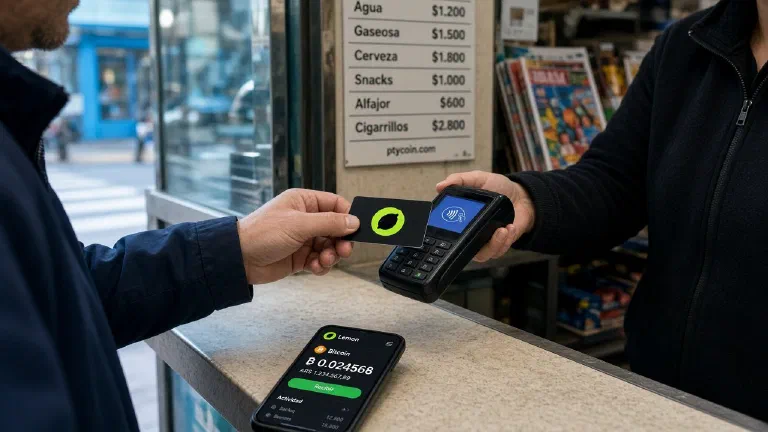
A freelancer in Guadalajara gets paid in sats for a project. Instead of converting on an exchange and waiting for wires, they route the Lightning payment to their Aureo address. Minutes later, the pesos hit their BBVA or Banorte account via Mexico’s instant SPEI system. No platform custody of the bitcoin at any point on the way in or out.
Lightning and local rails, explained
Lightning is Bitcoin’s layer for fast, low-cost payments that settle on the main chain later. In Mexico, SPEI lets banks and authorized providers move pesos instantly between accounts 24/7.
Most crypto users still face friction: buy on an app, withdraw to a wallet (fees, delays, custody risk), then later sell and wait for bank deposit. Aureo designed both ends to minimize that.
With D2W, users send pesos via SPEI to Aureo and receive bitcoin directly to a wallet address they control — Lightning or on-chain. Aureo never takes custody of the BTC. The March launch post on their site emphasizes “Bitcoin straight to your wallet. No intermediate custody.”
D2B flips the direction for selling. The user creates and claims their name@aureobtc.com Lightning handle inside the Aureo app or flow, provides the bank details once for linking, and then anyone — employer, client, themselves from cold storage — can pay Lightning to it. Aureo handles the conversion at a transparent rate and pushes the MXN out.
Fees are volume-tiered, starting around 1.25-1.75% for core trades and lower for larger OTC, with clear published ladders. No withdrawal fees on the buy side because there is no withdrawal; the bitcoin goes straight out.
Why this matters for real use
The combination removes two common objections to self-custody in practice: “How do I get bitcoin without giving up control?” and “How do I get my money back out when I need pesos for rent or payroll?”
For Mexico specifically, the numbers line up. Chainalysis and local reports have repeatedly ranked the country among LatAm’s top crypto economies by transaction volume, with strong retail participation and a massive U.S.-Mexico remittance corridor. Platforms like Bitso have shown crypto can capture real share of cross-border flows at lower cost.
Aureo’s team brings local Bitcoin-native credentials: roots in La Casa de Satoshi, a Mexico City grassroots space and coworking hub for Bitcoiners, plus meetups and education efforts. CEO Gustavo Flores Echaiz and CMO Maciej Cepnik have spoken publicly about building products that solve actual user problems in the market rather than chasing hype cycles.
Notably, Aureo operates as a registered Bitcoin Service Provider under El Salvador’s framework (listed in the Central Reserve Bank of El Salvador’s BSP registry and supervised accordingly). That gives it a regulated LatAm base while serving Mexican users — a pattern that may preview more regional bridging.
The LatAm angle
Across the region, people use bitcoin and stablecoins to navigate inflation, capital controls, and expensive or slow traditional rails. Argentina’s stablecoin dominance for daily value storage, Brazil’s massive stablecoin flows, and El Salvador’s ongoing treasury accumulation are well documented.
Mexico sits in the middle: a large, relatively stable banking system with SPEI that actually works well, yet still high demand for borderless, censorship-resistant money among freelancers, small exporters, families receiving remittances, and anyone who wants optionality outside the peso system.
Making the on-ramp and off-ramp fast, cheap, and non-custodial for the bitcoin leg lowers the switching cost. A user can hold keys, receive value in bitcoin, and still pay local bills without friction. That is the difference between “crypto as an asset class I buy and forget” and “crypto as money I can actually use day to day.”
The company explicitly frames the launch around the 55 million Mexicans (and foreigners living there) who can now create that direct Lightning-to-bank link. Whether the number reflects current banked adults or addressable users, the signal is clear: they are building for scale in a market where Lightning adoption is still early but growing.
Community reaction on the announcement thread was positive, with users immediately claiming handles and testing the flow. Some noted the timing coincided with a price dip, but the product utility stands independent of short-term volatility.
Takeaway
Direct to Bank is not a silver bullet, and it still involves trusting Aureo for the final fiat conversion and payout step — as any on/off-ramp must. But by keeping the bitcoin leg self-custodial on both sides and leaning on Lightning for speed, it removes a layer of friction that has kept many from treating bitcoin as everyday money rather than a speculative position.
For a LatAm audience that values both sovereignty and practicality, features that make self-custody the path of least resistance — not the heroic one — are what move the needle. Mexico now has one more live example of that.
Not financial advice. Bitcoin and Lightning involve risks including volatility, technical failure, and counterparty risk on any fiat conversion. Do your own research and only use amounts you can afford to lose. Sources include Aureo’s public announcement on X, their site documentation on D2W and fees, and public reporting on LatAm crypto volumes from Chainalysis and others.
Sources: