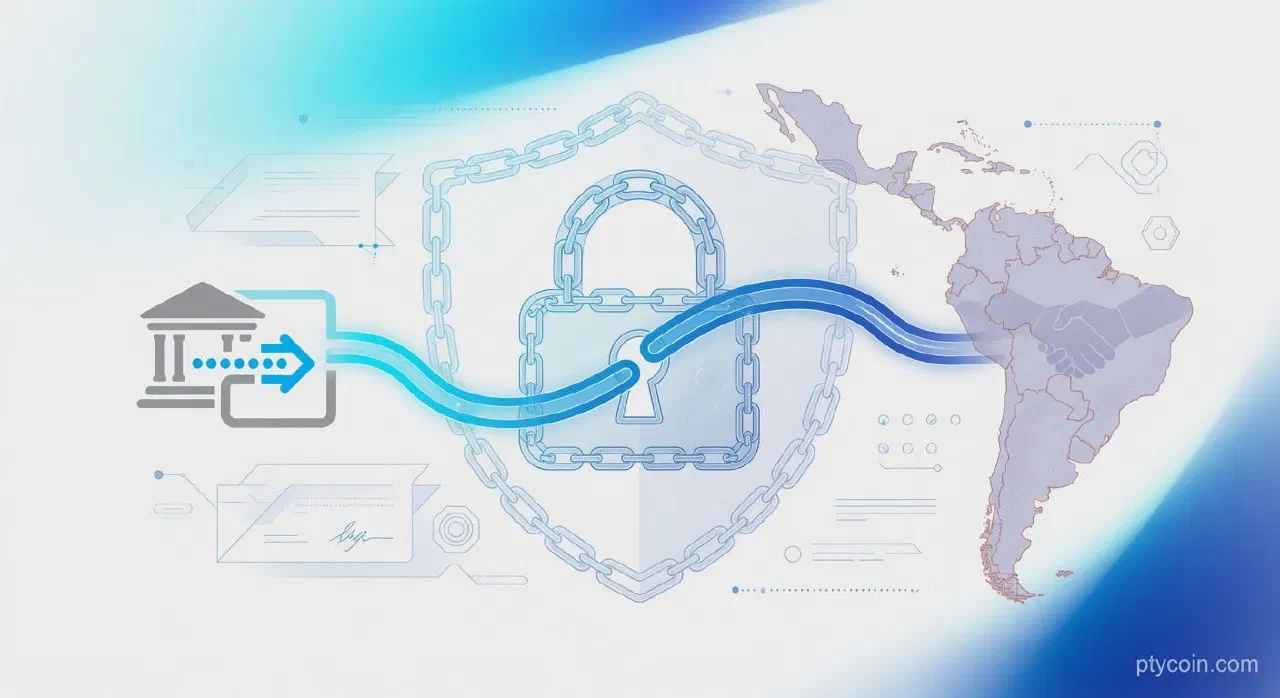
In Latin America, high-value peer-to-peer deals have long depended on personal trust or expensive, slow intermediaries. A Mexico-based project called Kustodia is bringing programmable, on-chain escrow to the table so buyers and sellers can lock funds until both sides confirm the goods or services changed hands.
The problem with P2P in the region
Latin America runs on P2P. From used cars and real estate deposits to freelance services and marketplace trades, strangers transact directly every day. By Kustodia’s figures, Mexico’s used-vehicle market tops $60 billion a year — almost entirely buyer-seller, with no dealer protection. The downside is stark: the company cites Latin America as carrying the world’s highest payment fraud rate, around 20% of merchant revenue lost annually, and pegs the resulting damage in Mexico at roughly $600 million a year.
Traditional escrow services exist but charge 3–6% and can take days or weeks to release funds while a human middleman reviews paperwork. Pure crypto on-chain deals offer programmable trust via smart contracts, yet they demand wallet setup, gas management, and blockchain literacy that most participants in these markets simply do not have.
Kustodia sits in the middle: it keeps the familiar local rails (bank transfers, WhatsApp chats) while moving the actual custody and release logic onto public blockchains where it can be verified by anyone.
How Kustodia works
The typical flow for a Mexican peso transaction requires no crypto wallet from the user:
- Buyer and seller agree terms over WhatsApp (or a marketplace integrates Kustodia’s API).
- Kustodia generates a unique SPEI deposit account for the buyer.
- The buyer sends pesos via Mexico’s instant payment system (SPEI). Those pesos are immediately swapped into MXNB — a 1:1 peso-backed stablecoin issued by Juno (a Bitso company) with regular independent third-party attestations — and locked inside an audited smart contract on Arbitrum.
- The seller delivers the vehicle, property access, or service.
- Both parties confirm completion (via WhatsApp reply or integrated webhook). Only then does the smart contract release the equivalent pesos to the seller’s bank account.
Neither buyer nor seller can unilaterally move the funds once locked. Every step is publicly verifiable on the Arbitrum block explorer at no cost to the participants. Kustodia absorbs the on-chain fees and bundles them; the user sees only the escrow commission — typically 3%, with volume discounts.
The same infrastructure supports direct Web3 flows at kustodia.app/web3 using USDC or MXNB on Arbitrum and Injective, plus USD wire for cross-border.
Built from a founder’s bad experience
Rodrigo Jiménez, Kustodia’s founder and CEO, started the project after losing money himself in a 2021 P2P scam. He spent the next three years building the missing piece: a neutral, programmable custodian that removes the need for either party to trust the other or a traditional escrow agent.
The initial vertical is used vehicles, where average tickets run around $15,000 and risk is highest. Integrations include vehicle history checks via Truora and identity verification. Other live use cases include real-estate rental deposits, crowdfunding campaigns, and B2B service contracts. Brazilian real (via Pix) support is planned for 2027 expansion.
Why this matters for Latin America
The region already punches above its weight in practical crypto use — stablecoins for hedging volatile local currencies, low-cost remittances, and on/off-ramps that sidestep slow banking. What has lagged is infrastructure that makes the same trust guarantees available to the non-crypto-native majority who still move money the old way.
By swallowing the blockchain complexity behind SPEI deposits and WhatsApp confirmations, Kustodia delivers on-chain finality and transparency to people who may never see a seed phrase. For markets where “I sent the money, where is my car?” is a recurring nightmare, that is material progress.
It also positions the region for the next wave: autonomous AI agents negotiating and executing contracts. In early June 2026 Kustodia announced production MCP (Model Context Protocol) tooling so agents can create escrows, lock funds, monitor delivery signals, and release payments entirely in natural language — no human in the loop for each step. Complementary to instant payment protocols like Coinbase’s x402, Kustodia supplies the time-bound custody layer that multi-step service deals require.
For readers who value self-custody, the model is interesting precisely because the funds live in publicly auditable smart contracts rather than a company’s hot wallet. Users who want full control can still withdraw to their own addresses via the Web3 path; the escrow itself is a temporary, rule-enforced holding pattern, not permanent delegation of keys.
Honest caveats
Kustodia is very early. The public Mexico launch happened at the end of April 2026; the AI-agent MCP features landed days ago. Smart contracts, even audited ones, carry risk — users should review the code and the upgradeability model (UUPS) themselves. The MXNB stablecoin leg depends on the issuer’s reserves and redemption promises; it is not a decentralized algorithmic coin. Adoption will depend on counterparties actually using the confirmation step honestly and on marketplaces integrating the API. High-value focus means it is not aimed at micro-transactions.
As with any new financial infrastructure, start small, verify the contract addresses on explorers, and understand that “on-chain” does not equal “zero risk.”
The takeaway
Kustodia demonstrates a pragmatic LatAm-first pattern: take a painful local coordination problem (stranger-to-stranger high-stakes trades), wrap the strongest part of blockchain (immutable conditional release) around the rails people already use (SPEI, WhatsApp, bank accounts), and keep the crypto optional. It is not a replacement for self-custodial wallets; it is a bridge that can make larger deals safer while the ecosystem matures.
Whether you are buying a car in Mexico City, putting down a deposit on an apartment in Bogotá, or watching AI agents start to trade services across borders, the underlying question is the same: who holds the money until everyone agrees the job is done? For the first time in the region, a public smart-contract answer is live and usable without forcing everyone to become a crypto power user.
Sources and further reading:
- Kustodia, “Kustodia launches smart contract escrow for LATAM’s $600M fraud crisis” (Cointelegraph press release, April 2026) — source of the fraud, market-size, and fee figures.
- Kustodia, “Kustodia launches the missing escrow layer for AI agents and x402 payments” (Cointelegraph press release, June 2026).
- Company site and docs: kustodia.app; @Kustodia_mx on X.
- MXNB stablecoin issuer/attestation details: Bitso Business.
This is a project profile, not investment, legal, or financial advice. Always do your own research and consider risks before using any service.