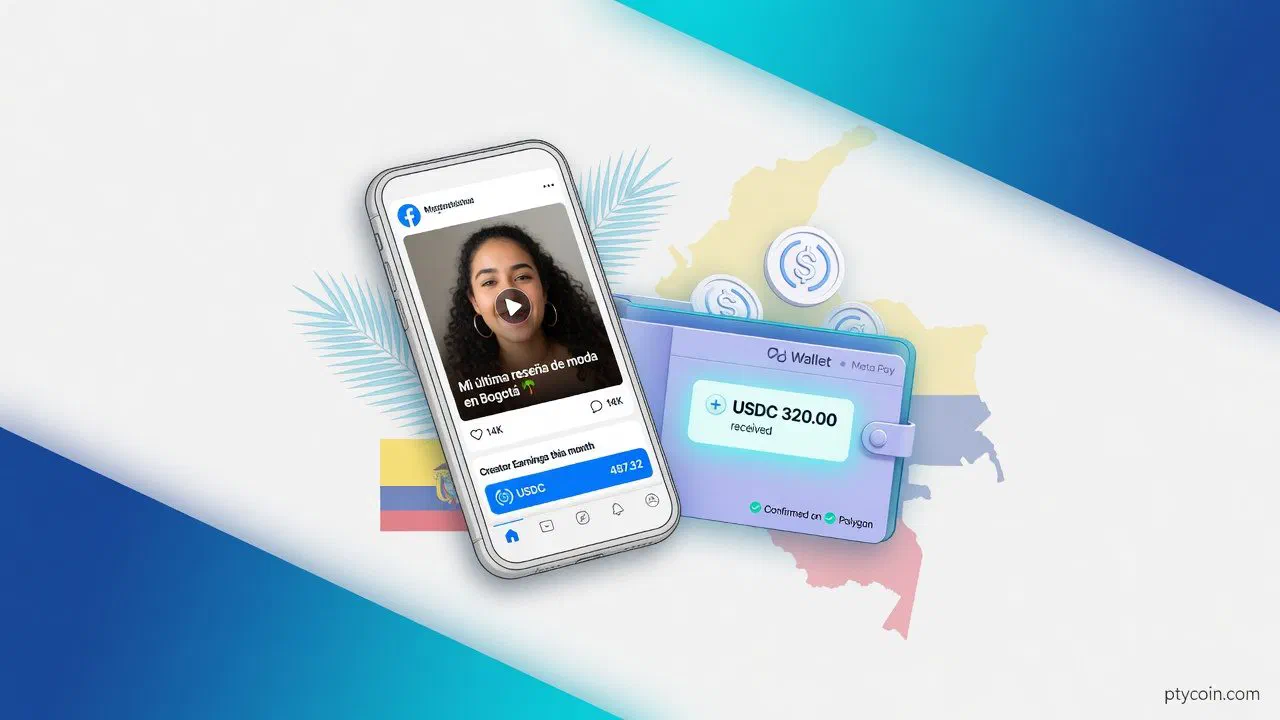
Meta is paying some Facebook creators in USDC — a dollar-pegged stablecoin — and Colombia is one of the first live markets. That is a real disbursement rail for the creator economy, not a white paper. The harder problem is what happens after the coins land: Meta does not convert them to pesos, so spending locally is still on you.
Context: from Libra flop to regulated stablecoins
If this sounds familiar, it should. Meta tried this once before with Libra (later Diem), a proprietary stablecoin pitched to its billions of users. Lawmakers pushed back hard; the project wound down in 2022. This time Meta is not minting its own token — it is routing payouts in USDC, the regulated dollar stablecoin issued by Circle, over public blockchains.
The timing is different, too. The U.S. GENIUS Act passed in 2025 and created a federal framework for dollar-backed stablecoins. Big Tech firms that sat on the sidelines during the Diem fight — Meta included — are now testing stablecoin rails under clearer rules. Fortune reported in April 2026 that Meta had quietly updated its payout documentation to offer the option, with Stripe handling some crypto-specific tax reporting.
Meta paid creators nearly $3 billion across Facebook monetization programs in 2025, per Polygon Labs’ announcement. Even a small slice of that volume moving on-chain would be meaningful payment infrastructure — which is why Polygon and Solana both issued statements when the program went live.
How the payout flow works
The mechanics are deliberately simple. Eligible creators opt into stablecoin payouts inside Facebook’s monetization settings, enter a compatible third-party wallet address, and their next scheduled disbursement arrives as USDC on either Polygon or Solana. Meta’s official help page documents the option; Fortune confirmed that Meta will not provide in-platform conversion to local currency.
That last detail is the whole story. Receiving USDC is step one. Step two — swapping to Colombian pesos, withdrawing to a bank account, or paying rent — requires a separate wallet, exchange, or on-ramp that supports your market. Meta routes the disbursement; it does not finish the last mile.
Polygon and Solana were not random picks. Stablecoin payment volume already concentrates on those networks, and Meta chose infrastructure where USDC already moves at scale. Polygon Labs said it expects the program to expand to 160+ countries by the end of 2026 via the Stripe partnership, up from the initial pilot markets.
Stripe’s involvement covers compliance plumbing — tax reporting for crypto-denominated income — not a full fiat off-ramp inside Facebook. A Stripe spokesperson confirmed the Meta partnership to Fortune. Creators who want pesos still need their own path out.
Why LatAm cares — especially Colombia
Colombia and the Philippines are the launch markets named in Polygon’s April 29 post. For LatAm readers, Colombia is the headline: a regional creator base now has a direct line from a U.S. tech platform to a self-custodied dollar balance, bypassing slow cross-border bank wires for at least part of the journey.
That matters because Colombia’s creator economy is large and cross-border by nature. Influencers, streamers, and page owners monetize global audiences but historically waited on international payment rails — PayPal availability, wire fees, FX spreads, and tax friction. USDC on Polygon settles in seconds for fractions of a cent in network fees. For a $200 monthly bonus payout, the economics beat a $15 wire fee and a five-day hold.
The catch is the off-ramp. Colombia has a growing crypto exchange ecosystem, but not every creator runs a verified account on a platform that supports COP withdrawals. Holding USDC in a self-custody wallet is pro-sovereignty — you control the keys — but it does not pay the grocery bill until you convert. CoinDesk argued in a June 6 opinion piece that disbursement rails are maturing faster than everyday spending infrastructure. Meta validates the send; someone else still has to solve the spend.
For creators already comfortable with wallets, this is an upgrade: fewer intermediaries, faster settlement, dollar exposure without a U.S. bank account. For everyone else, the onboarding cliff is real — seed phrase hygiene, exchange KYC, and COP liquidity are now part of the job.
Neighboring markets will watch Colombia closely. Brazil’s stablecoin cross-border flows already draw central-bank scrutiny; Mexico’s fintech on-ramps keep shipping; Argentina’s creators often prefer dollar balances by default. If Meta’s 160-country expansion materializes, LatAm creator payouts could shift from “wait for the wire” to “check your wallet” — but only where local off-ramps exist.
Takeaway
Meta’s USDC creator payouts are news because a platform with billions of users is treating stablecoins as a production disbursement rail, not a pilot. Colombia is in the first wave. The infrastructure to receive digital dollars is here; the infrastructure to spend them locally still is not Meta’s problem — it is yours.
If you are a creator in the pilot, treat the wallet address like a bank account number: use a reputable wallet, back up your keys, and map your COP off-ramp before opting in. If you are watching from the sidelines, the lesson is structural: stablecoin adoption in LatAm will be driven as much by payout volume from global platforms as by trading desks. The last mile — pesos in hand — remains where the real work happens.
Not financial advice. Stablecoins carry issuer, regulatory, and custody risks; exchange rates and off-ramp availability vary by country. Do your own research.
Sources:
- Fortune — Meta rolls out stablecoin payouts in Colombia and Philippines (Apr 29, 2026)
- Polygon Labs — Meta announces USDC creator payouts on Polygon (Apr 29, 2026)
- Meta Business Help Center — About stablecoin payouts with Meta
- CoinDesk — Meta is paying creators in stablecoins; spending them is someone else’s problem (Jun 6, 2026)