The United States and Iran have agreed to an interim peace deal that halts active fighting and sets a path to reopen the Strait of Hormuz — the narrow Persian Gulf chokepoint that carries roughly a fifth of the world’s oil. Global crude prices fell sharply on the news, and risk assets including bitcoin moved higher, though traders remain cautious after two prior ceasefires collapsed in recent months.
Context: a war that froze the world’s oil artery
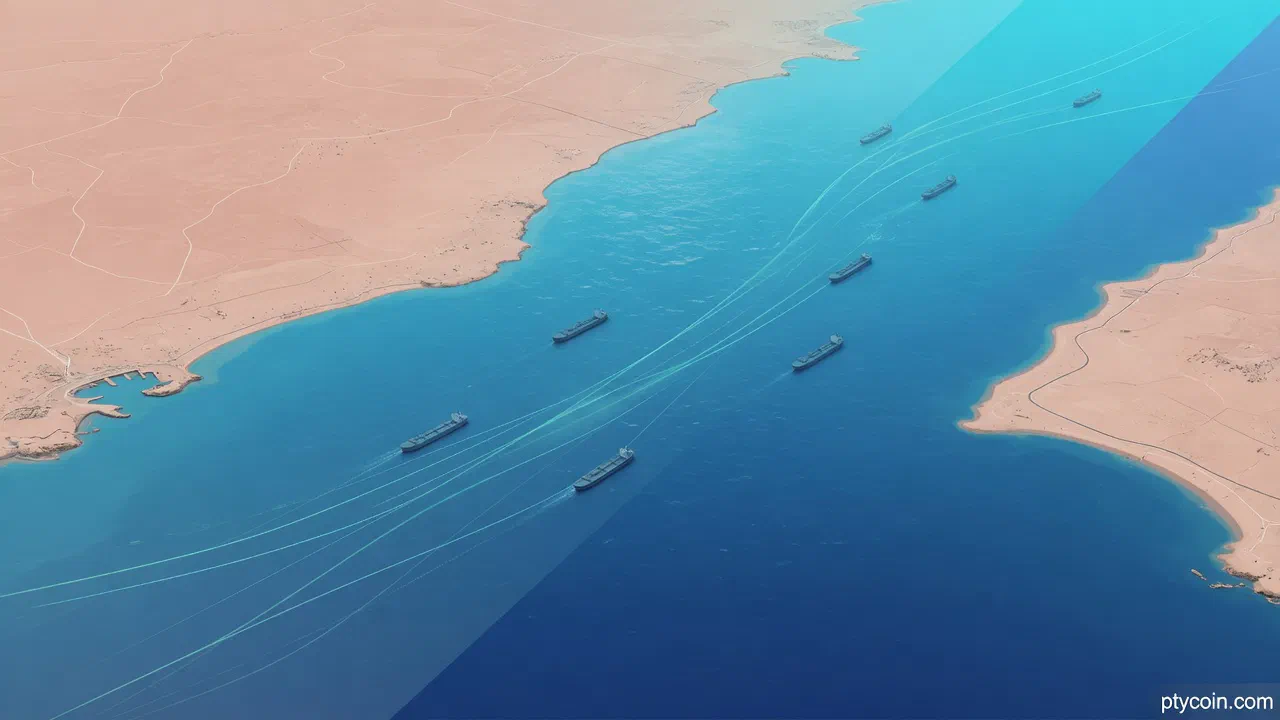
The conflict began on February 28, 2026, when the US and Israel launched strikes against Iran. The Strait of Hormuz — the channel between Iran and Oman through which tankers move Gulf crude to Asia, Europe, and beyond — was largely closed to commercial traffic as the US maintained a naval blockade and shipping insurers priced in extreme risk.
For more than three months, energy markets carried a geopolitical premium. Brent crude climbed as supply fears mounted, and every headline about Hormuz closures rippled through inflation expectations worldwide. Central banks from Washington to Tokyo had to weigh energy-driven price pressure against growth risks — a mix that has weighed on crypto and other risk assets through the first half of June.
What was announced on June 14
The breakthrough came via an unusual diplomatic channel. On Sunday, June 14, Pakistani Prime Minister Shehbaz Sharif — acting as a mediator alongside Qatar, Saudi Arabia, and Turkey — posted on X that the US and Iran had reached a peace deal. Both sides, he wrote, declared “the immediate and permanent termination of military operations on all fronts, including in Lebanon.”
US President Donald Trump confirmed the agreement on Truth Social, writing that the deal was “now complete” and authorizing “the toll free opening of the Strait of Hormuz” along with removal of the US naval blockade. Iran’s deputy foreign minister, Kazem Gharibabadi, confirmed the ceasefire on Sunday as well.
An official signing ceremony is scheduled for Friday, June 19, in Switzerland, with technical talks expected to precede it. Qatar’s foreign ministry welcomed the memorandum of understanding as “an important step towards consolidating sustainable peace,” and UK Prime Minister Keir Starmer said he hoped Hormuz reopening would stabilize energy markets.
The market reaction was immediate. Brent crude fell more than 4% toward $83 a barrel — its lowest level since early March — and Asian equities rallied. Bitcoin climbed roughly 2% to trade near $65,700, its highest in nearly two weeks, according to CoinDesk market data.
Why the relief rally comes with caveats
This is not the first time markets have cheered a Middle East truce only to give back the gains. A ceasefire in April collapsed, and US strikes broke a second truce on June 9 — each time erasing the crypto relief move, as CoinDesk’s live markets coverage noted Monday morning.
Several unresolved questions keep traders skeptical:
- The deal is interim. The full text of the memorandum of understanding has not been published. The Guardian’s explainer notes that Trump tied Hormuz reopening to the June 19 signing and mine-removal work, while Iranian state media reported reopening within 30 days under “Iranian arrangements” — a potential gap with US demands for toll-free navigation.
- Nuclear talks continue. Trump told the New York Times he could restart military operations if broader nuclear negotiations fail. Senior Pakistani officials told the Associated Press that nuclear discussions would continue over the next 60 days.
- Israel was not at the table. An Israeli airstrike on Beirut’s southern suburbs hours before the announcement nearly derailed the deal, and Netanyahu’s government has not endorsed the framework. Further military action by Israel or its proxies could still undermine the agreement.
Laevitas head of markets @scopicview noted on X that Monday’s crypto move looked like “macro relief beta, amplified by thin weekend liquidity” rather than a crypto-native story — meaning the bounce may fade unless ETF inflows and spot buying follow through.
Why Latin America cares
Latin America is not a passive observer here. Several of the region’s largest economies are net oil importers whose fiscal and monetary policy is sensitive to global crude prices.
Fuel and inflation. Mexico, Chile, Peru, and much of Central America import a significant share of their refined products. When Brent spikes, domestic gasoline and diesel prices follow — often with a lag, but always with political consequences. A sustained drop toward the low-$80s removes pressure from household budgets and from central banks that were watching energy-driven inflation before their next rate decisions.
Currency stability and savings behavior. In high-inflation economies like Argentina, households already treat dollar stablecoins and bitcoin as parallel savings rails when local currencies weaken. A calmer global macro backdrop does not replace the structural case for self-custody — peso volatility did not disappear overnight — but it can reduce the panic premium that pushes people to rush into hard assets at the worst moments.
Remittances and trade corridors. Stable shipping through Hormuz matters for global freight costs, insurance, and the price of goods that flow into LatAm ports. Cheaper energy inputs can ease import inflation for manufacturers and retailers, which indirectly supports the purchasing power of remittance dollars that families depend on.
Crypto as a regional risk gauge. LatAm crypto adoption is driven more by local currency stress and payments utility than by US equity cycles, but the two are not disconnected. When global risk appetite improves and the dollar funding environment softens, LatAm exchanges and on-ramps often see livelier flows — though, as this week’s prior false starts showed, that lift is fragile until the June 19 signing holds.
Takeaway
The US-Iran peace framework is the most consequential geopolitical headline of the day, and its energy-market spillover is real: cheaper oil, lower inflation anxiety, and a modest risk-on bid that reached bitcoin. For Latin American readers, the practical read is about fuel costs, inflation breathing room, and a slightly less frantic macro backdrop for the savings and payments tools — stablecoins, bitcoin, self-custody wallets — many already use daily.
Treat the rally as provisional, not permanent. Two collapsed ceasefires this spring taught crypto markets to wait for the Switzerland signing and sustained Hormuz traffic before pricing in lasting relief. Watch the June 19 ceremony, follow whether tankers actually transit the strait, and remember that local currency stress in LatAm has its own calendar — independent of any Middle East headline.
Not financial advice. Geopolitical agreements can collapse, oil prices can reverse, and crypto remains volatile. Do your own research.
Sources:
- Al Jazeera — US-Iran ‘peace deal’ announced; Trump says Strait of Hormuz reopening (June 14, 2026)
- The Guardian — What do we know about the US-Iran peace deal? (June 15, 2026)
- CoinDesk — Bitcoin hits two-week high as US-Iran deal sends oil sliding (June 15, 2026)
- CoinDesk — Live markets: traders cautious after collapsed ceasefires (June 15, 2026)
- Pakistani Prime Minister Shehbaz Sharif’s announcement on X and Qatar Ministry of Foreign Affairs statement (June 14, 2026)