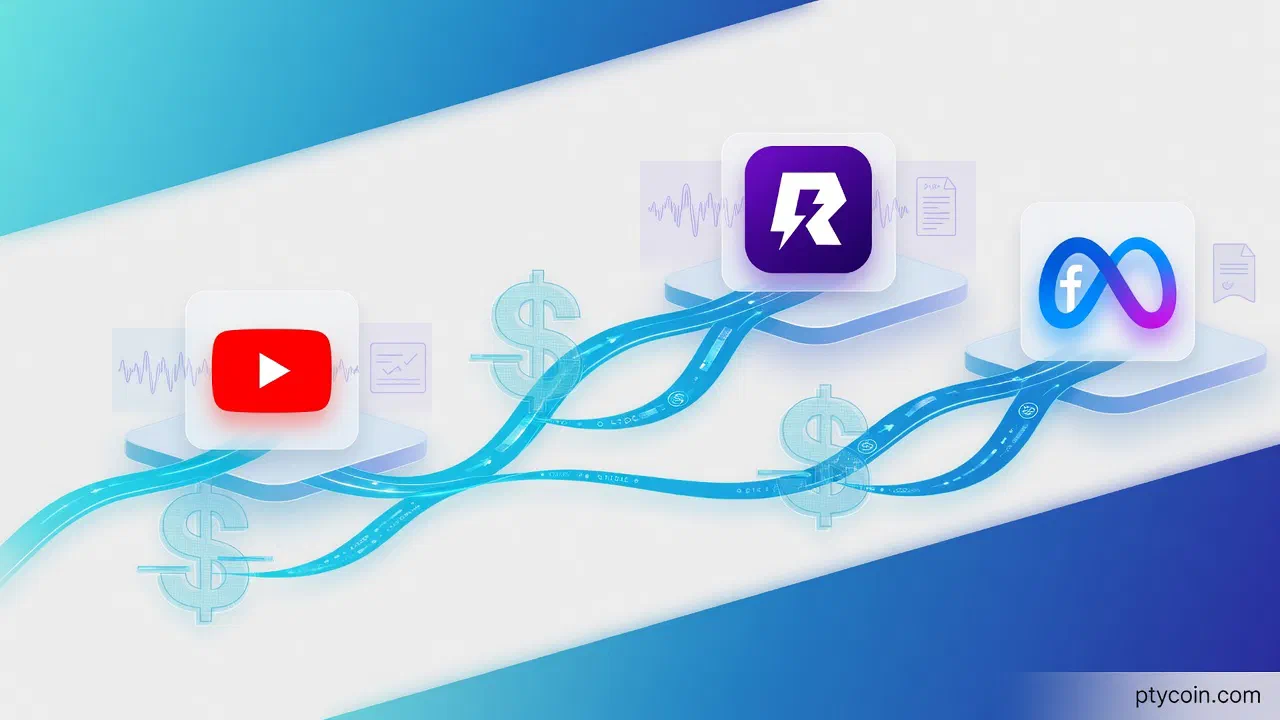
As of approximately 09:32 UTC on June 16, Bitcoin was trading near $66,676 on the BTC/USDT pair at Crypto.com Exchange — up about 1.6% over the prior 24 hours and holding above the mid-$66,000 area after Monday’s recovery. Ether printed near $1,793 with a roughly 4.1% gain in the same window. The trading tape is constructive, but the more durable markets story this week is not another daily candle: it is that three of the world’s largest content platforms now route creator payouts through stablecoins, each on a different rail.
Context
Stablecoins are cryptocurrencies pegged to a reference asset — usually the U.S. dollar — designed to hold a steady $1 value. They started as a trading convenience on crypto exchanges, but their real growth has come from payments: freelancers, remittance corridors, merchant settlement, and now platform disbursements.
That shift matters because trading volume and payment volume are not the same market. CoinDesk Research reported that combined centralized-exchange volumes fell 3.45% in May to $4.41 trillion — the lowest since September 2024 — even as real-world-asset perpetual futures hit a record high. The speculative layer cooled; utility rails kept expanding.
The backdrop is regulatory clarity. The U.S. GENIUS Act, signed in 2025, created a federal framework for dollar-backed stablecoins. Big Tech firms that avoided crypto during the Diem fight are now testing disbursement rails under clearer rules — not as experiments, but as production payout options wired into existing gig-economy infrastructure.
Analysis
Three platforms, three stablecoins, three architectures — and none of them require the recipient to be a crypto trader.
YouTube now lets U.S. creators opt into payouts in PayPal’s PYUSD stablecoin. Fortune confirmed in December 2025 that the feature is live, routed through PayPal’s existing enterprise payouts service. YouTube does not touch crypto directly — PayPal handles the conversion layer. The option is U.S.-only for now, but the model is instructive: a platform with billions of users can add a stablecoin rail without rebuilding its treasury stack.
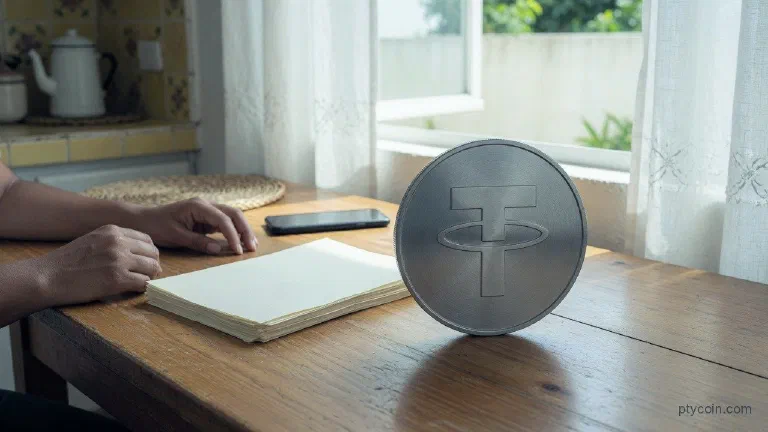
Rumble took a different path. In January 2026, the video platform launched Rumble Wallet with Tether, embedding a non-custodial wallet directly into the app. Creators can receive tips and payouts in USDT, Bitcoin, or Tether Gold. MoonPay powers fiat on- and off-ramps. The pitch is borderless, intermediary-free payments — no ad network, no bank wire, no payment processor sitting in the middle.
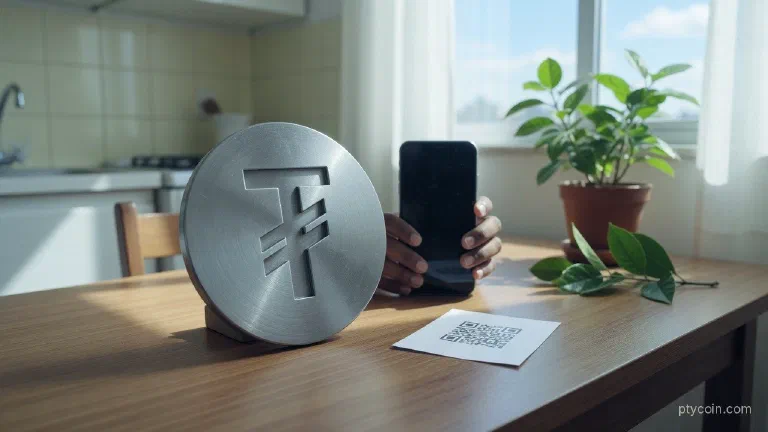
Meta rounds out the trio with USDC disbursements over Polygon or Solana, supported by Stripe. We covered the Colombia launch in detail in our June 8 piece; the markets-relevant update is the scale trajectory. Polygon Labs expects expansion to 160+ countries by end-2026 via the Stripe partnership — turning a two-market pilot into a global disbursement network.
The common thread: these are disbursement products, not trading products. Platforms are treating stablecoins the way payroll processors treat ACH — a settlement rail that is faster and cheaper than cross-border wires for gig workers spread across dozens of countries.
The unresolved problem, as CoinDesk’s Tim Joslyn noted in June, is the last mile. Receiving USDC, PYUSD, or USDT is step one. Converting to spendable local currency — Colombian pesos, Brazilian reais, Argentine pesos — still requires a wallet, exchange, or on-ramp that works in your market. None of these platforms finish that conversion for you.
Meanwhile, the trading tape shows Bitcoin recovering from June’s lows even as institutional flows remain mixed. U.S. spot Bitcoin ETFs logged a net $64 million outflow on Monday, per CoinDesk’s live markets desk — though the loss came almost entirely from Grayscale’s legacy GBTC fund ($124 million out), while BlackRock’s IBIT actually took in $66 million. Ether, XRP, and Solana ETFs all posted modest inflows. The chart below plots BTC price against the Fear & Greed Index over the past eight sessions.
BTC price vs the Crypto Fear & Greed Index, Jun 9–Jun 16. The June 16 point is an intraday read as of ~09:32 UTC, not a settled close. Price has climbed toward $67k while sentiment edges from extreme fear toward 23 — still fearful, not neutral. Source: Crypto.com Exchange 1D candles + alternative.me.
Price and sentiment are recovering in tandem — BTC up from the low-$61,000 area nine days ago, Fear & Greed climbing from 9 to 23 — but both remain well below the optimism of earlier this year. The divergence between cooling CEX volumes and expanding platform payout rails is the structural read: crypto’s payment utility is decoupling from its trading beta.
Industry projections about creator-economy stablecoin volume exist — one widely cited estimate suggests roughly $25 billion per year if even 10% of global creator payouts shifted on-chain — but that figure is a projection, not observed flow data. No platform has published hard disbursement volumes yet. Treat any such number as illustrative, not confirmed.
Why LatAm cares
Latin America did not wait for YouTube or Meta to discover stablecoin disbursements. On-chain and exchange data have repeatedly shown stablecoins comprising the large majority of fiat on- and off-ramps in key regional corridors — often cited above 90% of crypto-related volume in Brazil and well over half in Argentina, per TRM Labs, Chainalysis, and Banco Central do Brasil reporting.
Freelancers, remittance senders, and small businesses in the region already use USDT and USDC for the same use case these platforms are now building: getting paid in dollars without a slow cross-border wire. Colombia is in Meta’s first wave. Brazil’s fintech on-ramps — Bitso, Mercado Pago, Nubank — already support stablecoin holdings. Mexico hosted the Stablecoin Conference Latam on June 15–16, with agendas focused on payroll, merchant acceptance, and cross-border settlement.
The LatAm read is not “Big Tech discovered stablecoins.” It is “Big Tech is catching up to what the region already does — and the bottleneck is still the same.” Receiving digital dollars is the easy part. Spending them locally — converting to pesos, reais, or bolívares at fair rates with reliable off-ramps — is where infrastructure either works or does not. Self-custody matters here: if your payout lands in a platform-controlled wallet, you inherit their rules, fees, and geographic limits. If it lands in a wallet you control, you choose the off-ramp.
Takeaway
June 16’s trading tape shows Bitcoin holding the mid-$66,000s with Ether outpacing BTC and sentiment crawling out of extreme fear. Monday’s ETF flows were mixed — a headline outflow driven by GBTC, not broad distribution. Those are useful context markers, not the headline.
The headline is structural: YouTube, Rumble, and Meta are all routing creator payouts through stablecoins on production rails, while centralized-exchange trading volumes hit their lowest level since September 2024. Crypto’s markets story is splitting — speculation cools, disbursement infrastructure expands. Latin America has been living on the disbursement side for years. The question is whether global platform rollouts improve local off-ramps or simply add more ways to receive dollars you still cannot easily spend.
This is analysis, not advice. Platform rollout timelines, payout volumes, and regulatory treatment can change. Projections about creator-economy flows are illustrative, not guarantees. Prices move in both directions. Readers should do their own research, consider their personal circumstances, and only allocate capital they can afford to lose.
Sources (selected):
- Crypto.com Exchange tickers (MCP snapshot ~2026-06-16T09:32 UTC): BTC last ~$66,676 on USDT (+1.57% intraday); ETH ~$1,793 (+4.11% intraday).
- Chart data via markets-chart.mjs (Crypto.com 1D + alternative.me): Jun 15 settled close $66,316 F&G 20; Jun 16 intraday ~$66,676 F&G 23 (still forming).
- Fortune — YouTube stablecoin payouts via PayPal PYUSD (Dec 11, 2025)
- Rumble — Rumble Wallet launch with Tether (Jan 7, 2026)
- CoinDesk — Meta USDC payouts via Stripe (Apr 29, 2026); spending problem op-ed (Jun 6, 2026)
- CoinDesk Research — CEX volumes May 2026; ETF flows Jun 16, 2026
- Regional stablecoin volume share: TRM Labs, Chainalysis, Banco Central do Brasil.