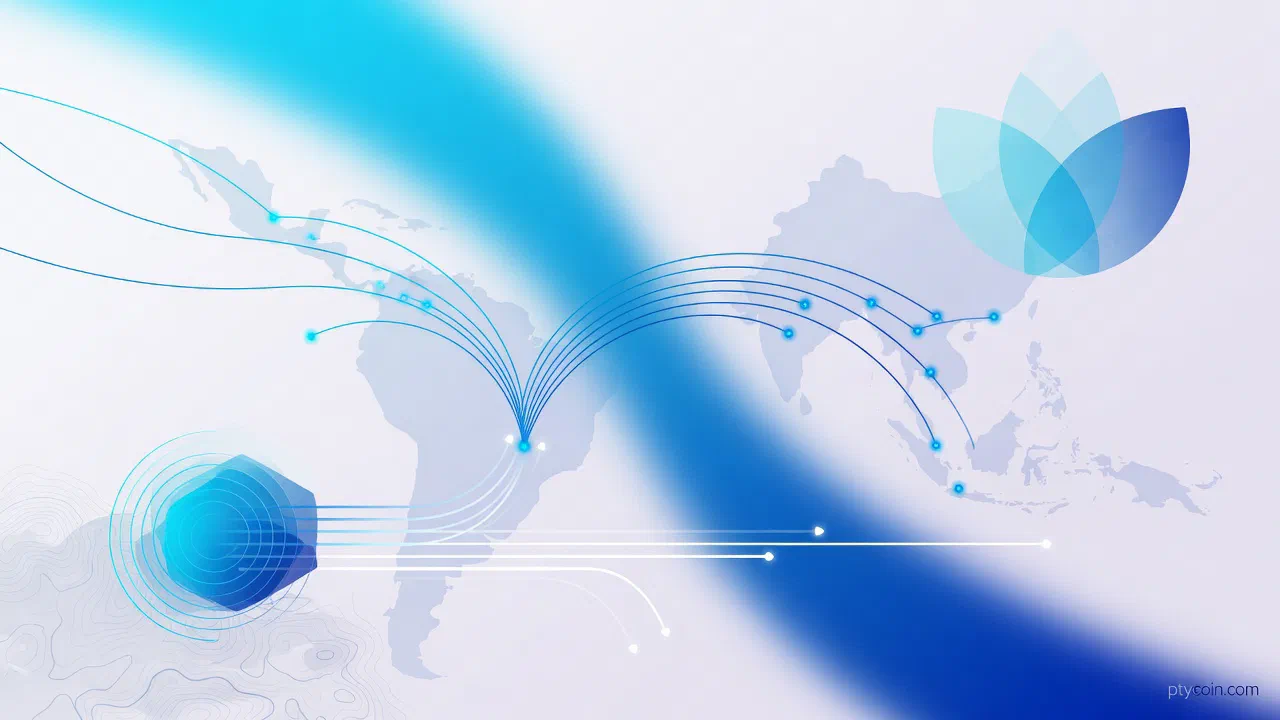
Bitso Business closed out its Stablecoin Conference 2026 in Mexico City with three concrete moves: new regulated corridors linking Latin America to Asia, a dedicated real-time payments API for Colombia, and the selection of four startups for its The Push 2026 accelerator program.
The announcements build directly on the “hybrid finance” theme that framed the event. They show Bitso extending its one-API model for local rails, stablecoin liquidity, and compliance outward to new partners while backing the next layer of builders.
Context: one infrastructure, multiple corridors
Bitso Business operates as the enterprise arm of the regional exchange group. Clients use a single set of APIs and accounts to move between local payment systems (SPEI, PIX, PSE, etc.), dollar stablecoins, and FX — all with built-in compliance hooks that traditional banks and corporates require.
The model has scaled with LatAm-specific volume, but demand is not limited to the region. Asian companies seeking exposure or operations in Latin America, and LatAm firms looking for counterparties or treasury options in Asia, have pushed for direct, trusted connections instead of chaining multiple intermediaries.
At the same time, Colombia’s digital payments adoption continues to accelerate. A country-specific API that packages local on/off ramps, instant settlement, and stablecoin options aims to lower friction for Colombian businesses and their international partners.
The announcements in detail
Asia corridors. Bitso Business is now actively enabling flows between Asia and Latin America through regulated channels. The expansion responds to inbound interest from Asian enterprises exploring business in the region and gives existing clients a compliant bridge without stitching together separate providers.
Colombia API. A new purpose-built API delivers a full real-time payments experience inside Colombia. It integrates local bank rails with the group’s stablecoin and FX capabilities so clients can handle pay-ins, payouts, and conversions in one flow.
The Push 2026 winners. The accelerator’s second edition selected:
- Etherfuse (Mexico): tokenizes sovereign bonds so investors anywhere can access government-backed yields that transfer freely on-chain.
- Checker (United States): a single API/network that lets financial institutions access and execute operations across multiple digital assets.
- Latitude (United States): real-time global fiat payouts plus stablecoin on/off-ramps for businesses.
- Saf.Money (El Salvador): combines Bitcoin, stablecoins, and traditional banking rails into one network for faster cross-border settlements across Central America.
Each winner receives investment (up to $250k in the program) plus infrastructure credits. The selection spans tokenization, institutional tooling, payments infrastructure, and regional settlement — all areas where stablecoins are already live in LatAm operations.
COO and Bitso Business GM Imran Ahmad emphasized the through-line: over a decade of regulator collaboration has created “rock-solid” compliance that now supports expansion. Corporate clients, he noted, “do not want to manage separate, fragmented providers for their cross-border operations.” Packaging FX, on-chain liquidity, and instant local ramps under one API is the response.
Why Latin America cares
For companies in Colombia, the new API means fewer hops and faster settlement when moving value inside the country or converting to stablecoins for treasury or supplier payments.
For the broader region, Asia access creates new sources of liquidity and customers. A Mexican exporter or Brazilian fintech can now route certain flows through Bitso’s rails directly toward Asian partners instead of relying solely on slower correspondent banking or multiple FX desks.
The accelerator winners matter because they are the next tools that will sit on top of or alongside the rails Bitso and peers are building. Etherfuse’s tokenized sovereign yields give LatAm and global users on-chain access to real government paper. Saf.Money’s Central America focus directly targets corridors where remittances and trade still carry high friction. Checker and Latitude strengthen the institutional side that ultimately funds and clears volume for retail and SMB use cases.
All of this keeps the emphasis on regulated, hybrid infrastructure rather than pure DeFi experiments. Users who prefer self-custody can still withdraw to their own wallets; the new connections make it easier for businesses to get value on and off the rails compliantly in the first place.
Takeaway
Bitso is using its home event not just to talk about hybrid finance but to ship the pieces: geographic reach, local depth in Colombia, and capital-plus-mentorship for the builders who will extend the stack.
The pattern is consistent with prior moves — add markets and products only when compliance is already in place, then let stablecoins serve as the connective tissue. For LatAm businesses and users, the practical result is more options to move value quickly and at lower cost, whether the destination is across the street in Bogotá or across the Pacific.
Whether these corridors and startups deliver material volume will show up in future TPV numbers. The direction is clear: the region’s payment infrastructure is deliberately reaching farther while staying anchored in the regulatory frameworks that let banks and corporates participate.
Not financial advice. Stablecoins carry issuer, reserve, regulatory, peg, counterparty, and operational risks. Expansion plans, APIs, and accelerator investments do not guarantee future product availability, liquidity, or performance for any user or business. Conduct your own due diligence and review the specific terms, attestations, and legal status of any service or token before use.
Sources:
- CriptoTendencia — Bitso Business salta a Asia, estrena API en Colombia y anuncia a los cuatro ganadores de The Push 2026 (June 17, 2026)
- Mondo Visione — Bitso Business Unveils Expansion To Asia And Next-Generation Payment Rails (June 16, 2026)
- Bitso X announcement of The Push 2026 winners during Stablecoin Conference 2026
- Prior coverage of Bitso Business, The Push program terms, and LatAm stablecoin payments infrastructure
- Stablecoin Conference LATAM 2026 program context (Mexico City, June 15-16)