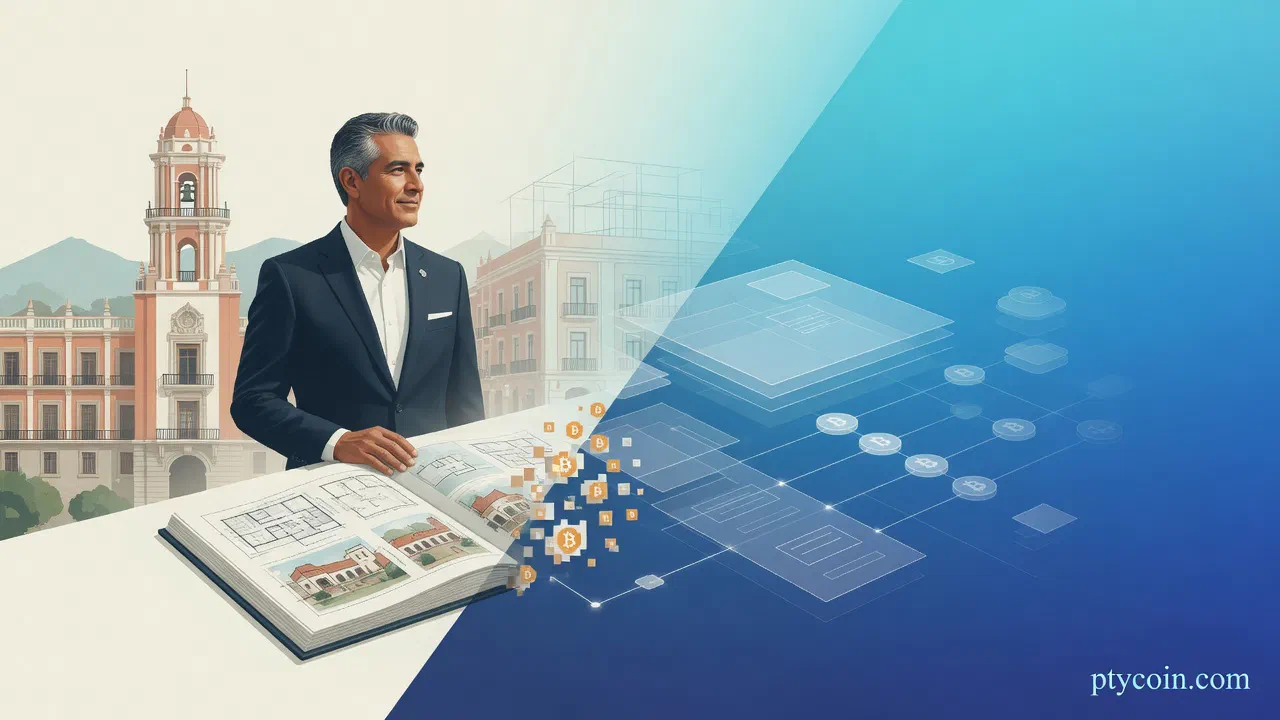
Mexican billionaire Ricardo Salinas Pliego says he now holds roughly 70% of his personal investment portfolio in Bitcoin and that the asset outperforms real estate as a long-term store of value.
Context
Salinas, whose net worth is estimated around $5 billion, chairs Grupo Salinas, a major Mexican conglomerate spanning retail (Elektra), banking (Banco Azteca), media (TV Azteca), and telecommunications. He has been vocal about Bitcoin for years. In 2020 he held about 10% of his liquid portfolio in the asset; that share has climbed steadily to the current 70% level.
The conviction is personal as well as philosophical. Salinas has publicly described convincing his wife to mortgage their house and use the proceeds to buy more Bitcoin. He frames the move as turning the largest asset most families own—home equity—into exposure to what he sees as superior monetary technology.
His views trace to family discussions in the 1970s after the end of the U.S. gold standard. His grandfather and father spoke of gold as protection against governments “printing money like crazy.” The Salinas family had interests in gold and silver mining, giving them direct experience with scarce assets. Salinas now sees Bitcoin’s 21-million-coin cap as the digital-era version of that scarcity.
Analysis
In a CoinDesk interview published June 17, Salinas laid out the case plainly. Fiat currencies lose purchasing power; Bitcoin does not because its supply is hard-capped by code. He pointed to a concrete comparison: in early 2016 one could buy a Central London house for roughly 4,000 BTC when the price sat near $400. Ten years later the same house price in pounds had barely moved while Bitcoin’s price meant the house now costs under 30 BTC.
He calls the asymmetry “an asymmetrical bet to the upside.” More adoption drives more demand. He has also said he believes Bitcoin will reach $1 million, though he declines to predict when.
Salinas holds the rest of his liquid investments mainly in gold and gold miners, describing a 70/30 split in recent statements. He does not appear to use leverage or trading strategies; the allocation reads as a long-term treasury-style position.
The scale is notable. Very few high-net-worth individuals or family offices publicly disclose allocations this concentrated in Bitcoin. Salinas stands out as one of the most prominent private Bitcoin holders in Latin America.
Why LatAm cares
Mexico ranks among the top countries in Latin America for crypto adoption according to multiple reports. Currency volatility, remittance flows, and distrust of traditional finance have long driven interest in hard assets. A leading Mexican businessman publicly treating Bitcoin as superior to real estate and using home equity to acquire more sends a powerful signal within the country’s business and wealth circles.
For everyday users in Mexico and across the region, the example reinforces that self-custody of Bitcoin is not fringe speculation but a deliberate strategy by people with access to every traditional asset class. It also highlights the portable, unseizable nature of Bitcoin—qualities that matter where capital controls, inflation, or political risk exist.
Grupo Salinas’s own footprint in banking and retail means the stance carries weight beyond personal finance. When influential local figures speak this directly, it accelerates conversation inside families, boards, and financial advisors who still default to real estate, pesos, or dollars.
Takeaway
Salinas’s allocation and rhetoric are a high-conviction personal decision, not investment advice. The interview adds to a growing list of Latin American business voices choosing Bitcoin for the same reasons that have driven grassroots adoption for years: scarcity, portability, and skepticism of endless fiat creation. Whether one agrees with a 70% weighting, the underlying case he makes—hard money wins when fiat loses trust—tracks the same logic that has made stablecoins and Bitcoin useful tools across the region. Readers should do their own research and size positions according to their risk tolerance and time horizon. Not financial advice.
Sources:
- CoinDesk, “Mexican billionaire with 70% of his investment portfolio in bitcoin says it’s better than real estate” (June 17, 2026 interview by Olivier Acuna).
- Bitcoin Magazine, “Mexican billionaire Ricardo Salinas bets 70% of his portfolio on Bitcoin, eyes $1 million price” (corroborating coverage).