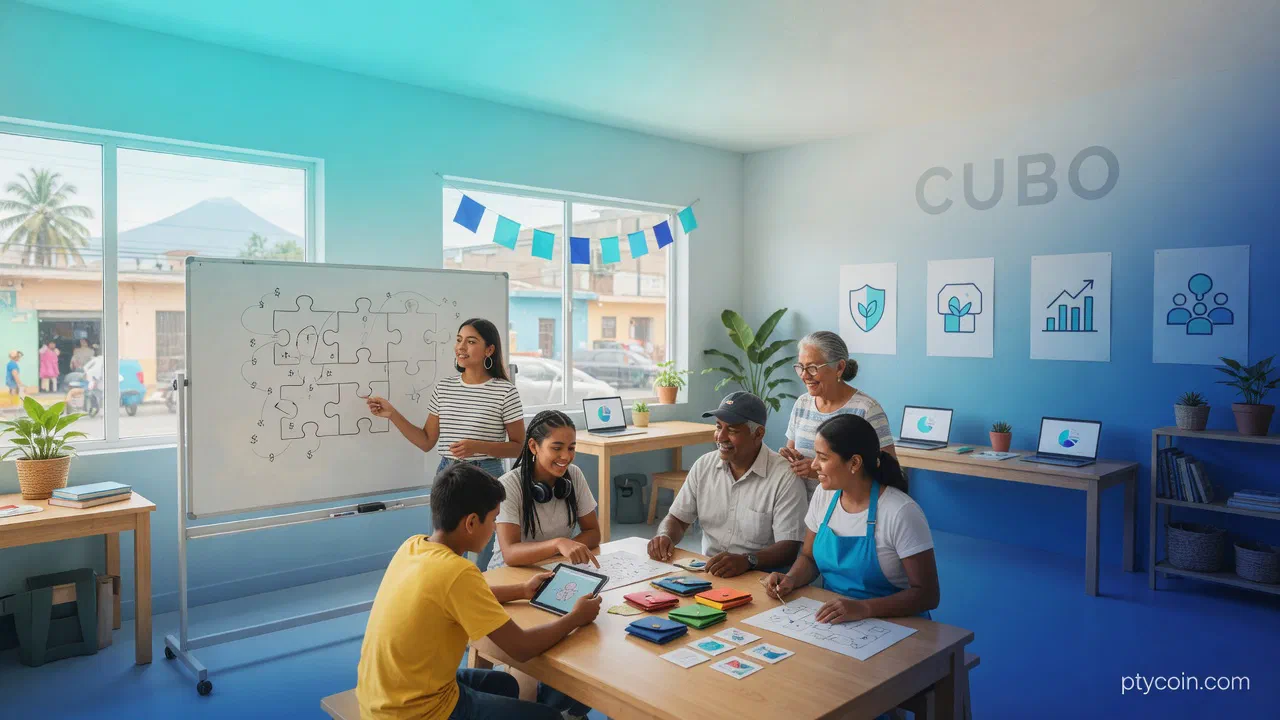
El Salvador opened its fourth dedicated Bitcoin education space on June 21, inside the CUBO Valle Verde community hub in Apopa. The new “Zona Bitcóin” offers classes and activities where children, young people, and adults can learn how Bitcoin works, understand the economics behind it, and explore tools that are reshaping global finance.
The inauguration by the Dirección de Reconstrucción del Tejido Social and the National Bitcoin Office (ONBTC) marks the latest step in a sustained push to build on-the-ground digital and financial literacy alongside the country’s treasury strategy.
Context: CUBOs and Bitcoin Zones
CUBOs — Centros Urbanos de Bienestar y Oportunidades — are government-run community centers across El Salvador that deliver local services, training, and opportunity programs in neighborhoods. The Bitcoin Office has been placing “Zonas Bitcoin” inside selected CUBOs to turn these everyday spaces into entry points for Bitcoin education.
Previous zones have launched in other municipalities, with Apopa’s now counted as the fourth. The model pairs basic introductions (“how Bitcoin works”) with practical sessions on Lightning Network payments, digital wallets, and the role of sound money in personal and national finance.
The effort continues even after 2025 reforms that made merchant acceptance of bitcoin voluntary under the IMF-supported economic program. While the legal-tender mandate narrowed, education and treasury accumulation programs have kept moving.
The Apopa opening and what happens inside
Officials from @TejidoSocialSv and the Bitcoin Office announced the new zone with photos of the space and programming focused on all ages. Sessions include classes and formative activities so visitors “can learn how bitcoin works and better understand the economic processes linked to this technology.”
The Bitcoin Office has also run parallel CUBO+ programs that go deeper into development topics such as building on Lightning. Graduates of those tracks have publicly credited the office and its leadership for hands-on training.
Events around the launch included community elements like free pupusas for attendees, underscoring the local, accessible character of the initiative rather than a top-down tech rollout.
Why this matters for Latin America
Latin America leads in crypto adoption metrics in several global rankings, with Argentina, Brazil, and others posting high ownership and on-chain activity driven heavily by stablecoins and remittances. Yet knowledge gaps remain a practical barrier: many users encounter crypto first through apps or informal channels without a clear picture of self-custody, keys, or monetary properties.
Placing structured Bitcoin education inside existing neighborhood centers reaches people who may never walk into a crypto exchange or conference. It treats literacy as infrastructure — the same way libraries or job-training centers do.
For other governments and civil-society groups across the region watching El Salvador’s experiment, the Zona model is replicable without requiring full legal-tender status. It focuses on informed participation over mandated use.
The approach also aligns with the pro-self-custody stance that runs through PTYcoin coverage: education that teaches people how to hold and move their own keys reduces reliance on custodial platforms and gives users real optionality.
Takeaway
By opening another Bitcoin education zone in a working-class area of greater San Salvador, El Salvador is investing in the long, unglamorous work of building capability rather than just headlines. The treasury keeps stacking; the community centers keep teaching.
For LatAm readers, the signal is that adoption at scale may depend as much on repeated, local explanations of the technology as on price charts or regulatory decrees. When the next wave of users arrives, some of them will have learned the basics at a CUBO.
Not financial advice. Bitcoin and related technologies involve technical, regulatory, and adoption risks. Education programs do not guarantee usage or outcomes. Do your own research and consider local rules.
Sources:
- @TejidoSocialSv announcement on X (June 22, 2026)
- Diario El Salvador coverage of the Apopa inauguration (June 22, 2026)
- @bitcoinofficesv announcement of the 4th Bitcoin Zone (June 21, 2026)
- The Bitcoin Office of El Salvador (bitcoin.gob.sv)
- Prior reporting on CUBO Bitcoin Zones and CUBO+ training programs