

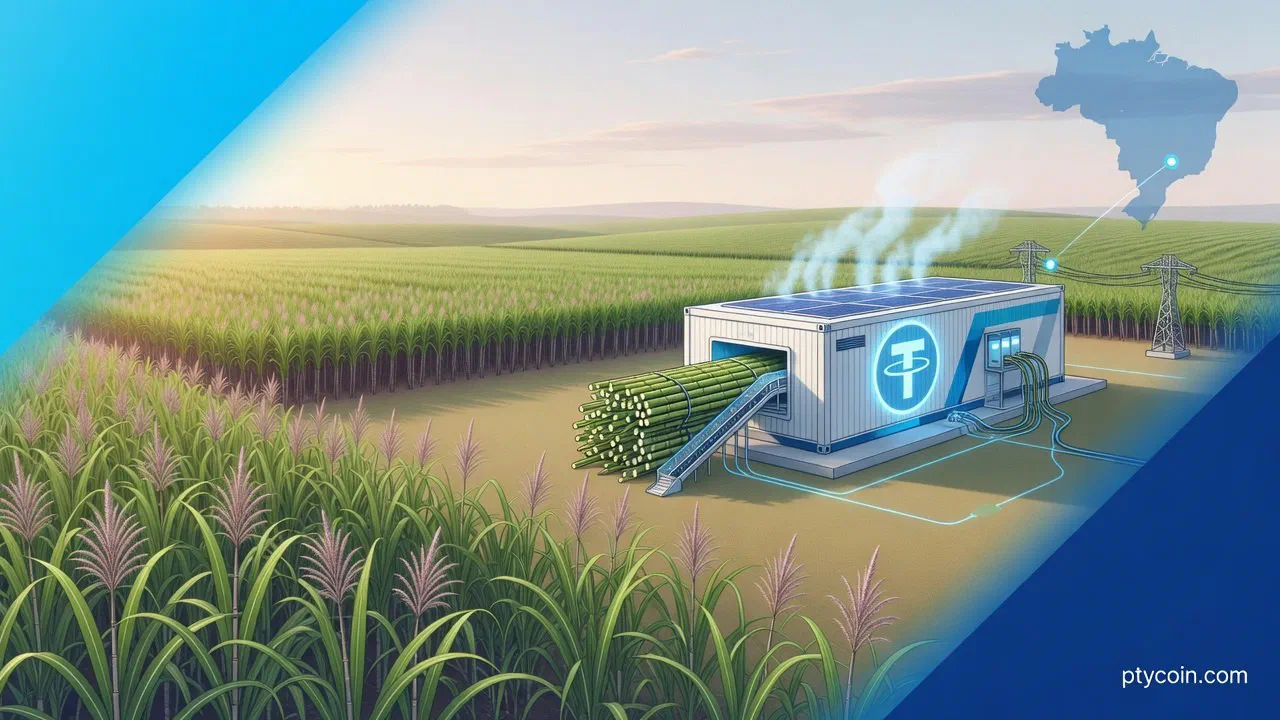
Tether-backed Adecoagro is preparing to begin Bitcoin mining operations in Brazil that run on electricity generated from sugarcane waste. The agribusiness company, in which Tether holds a majority stake, has set a target launch date of July 1, 2026, for a pilot facility in Ivinhema, in the state of Mato Grosso do Sul.
The initial setup will use 10 megawatts of capacity and approximately 1,280 mining machines. The energy source is bagasse, the fibrous residue left after sugarcane is crushed for sugar and ethanol production.
Background on the project
Adecoagro (NYSE: AGRO) is a South American agribusiness with operations spanning sugar, ethanol, grains, and dairy. Its mills generate renewable electricity by burning bagasse to produce steam and power for their own industrial processes. In large plants this often creates surplus power beyond internal needs.
In September 2025, Adecoagro and Tether signed a memorandum of understanding to explore Bitcoin mining as a use for that surplus renewable energy. Tether acquired a controlling stake in Adecoagro, giving the stablecoin issuer exposure to agricultural assets and renewable generation in the region.
On June 1, 2026, Adecoagro project manager Matheus Lechuga publicly detailed the plan at the “Roots of the Future – Technology and Innovation to Build Tomorrow” forum in Mato Grosso do Sul. Local reporting and Bitcoin Magazine covered the disclosure in early June.
How the pilot will work
Bagasse is already a standard fuel at Brazilian sugar and ethanol mills. Mills burn it in high-pressure boilers to generate the heat and electricity required for processing. When production exceeds on-site demand, the excess can be exported to the grid or, in this case, directed to a colocated mining operation.
Adecoagro reports more than 230 megawatts of renewable electricity generation capacity across its South American sites. The 10 MW pilot represents a small initial slice, intended as a proof-of-concept for using mining as a flexible, controllable load that can absorb surplus power without new grid infrastructure.
Tether is contributing expertise in Bitcoin mining operations and will supply its proprietary Mining OS to manage the site. The company has stated plans to open-source that software in the coming months.
The state government of Mato Grosso do Sul has supported the project by assisting with environmental licensing and business structuring, according to local coverage.
Why this development matters now
The July 1 target places the launch roughly four weeks from the June 26 reporting date. While earlier announcements outlined the MoU and concept, the recent forum comments and press coverage mark the shift from planning to near-term execution.
For Bitcoin mining, the project adds another example of operations pairing with existing industrial energy assets rather than competing directly for grid power. For Tether, it extends the company’s involvement beyond stablecoin issuance into physical infrastructure and Bitcoin production itself.
Adecoagro has also indicated interest in using the project to explore Bitcoin as a treasury asset alongside its traditional holdings of land and commodities.
Why LatAm cares
Brazil is the world’s largest producer of sugarcane and a leader in renewable energy from biomass. Turning processing byproducts into Bitcoin mining load keeps economic activity inside the country and inside the agricultural value chain.
Interior states like Mato Grosso do Sul gain direct investment and technical operations that would otherwise not locate there. The pilot also tests whether mining can serve as a reliable buyer for surplus power, potentially improving the economics of renewable generation projects in agricultural regions across Latin America.
Tether’s USDT is already deeply embedded in Latin American commerce for hedging, remittances, and payments. Extending that presence into local energy and mining infrastructure signals a longer-term bet on the region’s role in both stablecoin usage and Bitcoin network security.
Users and businesses in the region benefit indirectly when more sustainable, locally powered mining capacity comes online: it reinforces Bitcoin’s energy narrative with real LatAm examples and can support broader interest in self-custody and on-chain activity.
The takeaway
Adecoagro’s pilot shows how an established Latin American industry can put surplus renewable capacity to work securing the Bitcoin network. As the July 1 target approaches, the project will provide one of the clearest near-term tests of agribusiness-linked mining at scale in the region.
The setup relies on resources Brazil already produces in abundance and infrastructure the company already operates. If the pilot performs as planned, similar pairings of mills, surplus power, and mining hardware could appear at other large producers.
This article is based on publicly reported information for informational purposes. It is not financial, legal, or investment advice. Crypto markets and mining economics are volatile; verify the latest project status directly with Adecoagro and Tether and consult qualified professionals for any decisions involving capital or operations.
Primary sources
- Bitcoin Magazine, “Tether-Backed Adecoagro To Launch Sugarcane-Powered Bitcoin Mining In Brazil” (June 3, 2026).
- Livecoins, “Mineração de bitcoin movida a energia de cana-de-açúcar ganha força no Mato Grosso do Sul” (June 2, 2026), quoting Adecoagro project manager Matheus Lechuga.
- Adecoagro Investor Relations, “Adecoagro And Tether To Power Bitcoin Mining With Renewable Energy In Brazil” (September 2025 MoU announcement).
- Additional context from Campo Grande News local reporting and X posts referencing the July 1 target (June 2026).