
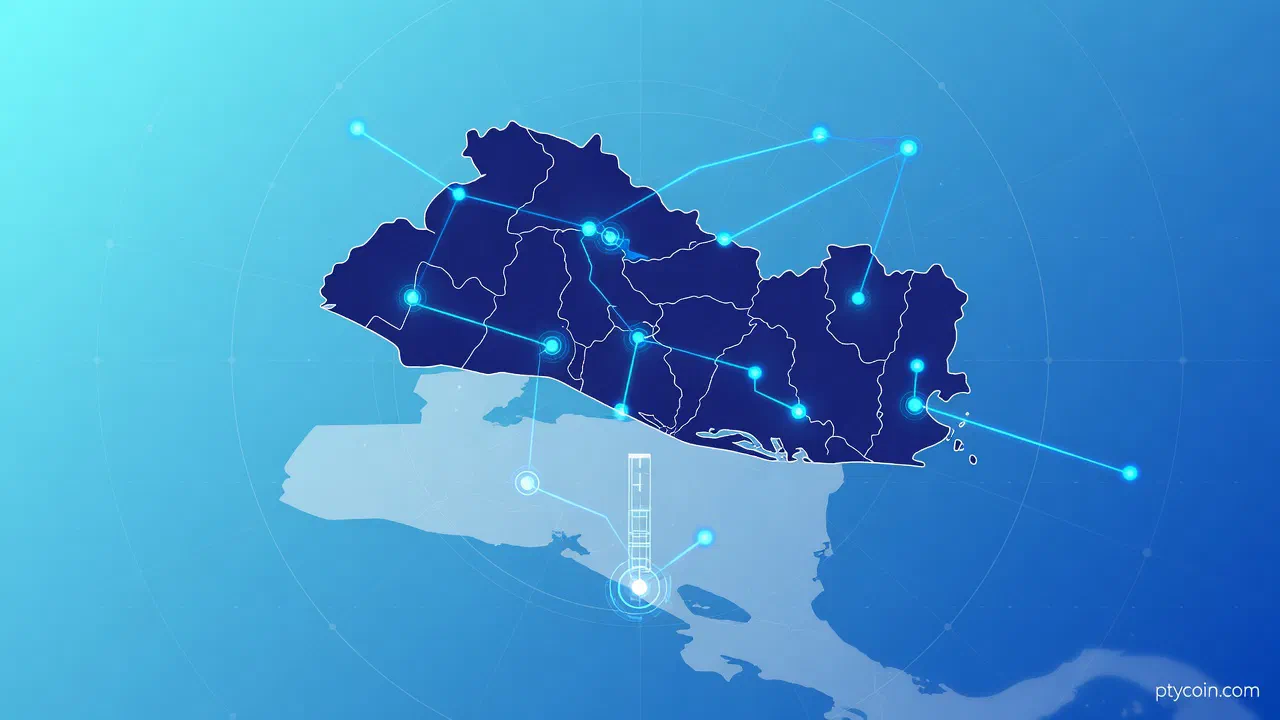
El Salvador’s National Bitcoin Office announced that the country operates its own full Bitcoin node on the network. The move, highlighted in official posts this week, adds a layer of direct network participation to the country’s long-running Bitcoin strategy alongside its treasury holdings and public education efforts.
Running a national node means the government verifies blocks and transactions independently rather than relying exclusively on third-party infrastructure. For a sovereign that has held and accumulated bitcoin for years, the step signals a shift toward owning more of the technical stack that underpins its reserves and any future services.
What operating a Bitcoin node entails
A full node downloads and validates the entire Bitcoin blockchain. It enforces consensus rules, checks every transaction and block, and can relay data to other participants. Unlike light clients or exchange APIs, it does not trust external parties for the integrity of the ledger.
For a country, the implications are practical: independent auditability of on-chain flows, reduced dependence on foreign or commercial infrastructure during periods of stress, and a concrete platform for education. The office’s public dashboard at bitcoin.gob.sv already surfaces mempool data, recent blocks, fee estimates, and the treasury balance in real time.
Context: treasury, zones, and infrastructure
El Salvador continues its daily bitcoin purchases. As of the most recent on-chain records visible on the office’s explorer, the treasury holds 7,696.37 BTC. Recent blocks show 1 BTC additions with transparent txids, consistent with the government’s stated policy of steady accumulation.
Parallel to the reserve, the Bitcoin Office has expanded its “Zonas Bitcoin” network. The fourth opened recently in Apopa, offering classes on Bitcoin, Lightning, and digital finance for residents of all ages. A companion “Bitcoin Country” site (bitcoincountry.gob.sv) maps merchants that accept bitcoin across departments and categories, complete with filters and an invitation for businesses to add themselves.
These efforts pair on-chain holdings with on-the-ground presence. A national node closes one more loop: the ability to observe and interact with the network without intermediaries.
Why the timing and the signal matter
The announcement arrives against a backdrop of maturing tools and ongoing debate about what “Bitcoin adoption” looks like after the initial legal-tender phase and subsequent policy adjustments. Daily purchases continue. Education spaces multiply. Now the Office is demonstrating it can stand up core infrastructure.
For proponents of self-custody, the distinction is meaningful. A government that only holds bitcoin on exchanges or via custodians still depends on those entities’ uptime, compliance choices, and willingness to honor withdrawal requests. Operating a node is a small but visible assertion of operational independence.
It also creates a reference implementation local teams and students can study. The CUBO+ certificate program and zone activities already train developers and users; a live national node gives them something concrete to query and build against.
A low-cost model for the region
Many countries in the region face similar questions: how to treat bitcoin and stablecoins as more than trading instruments when volatility hedging, remittances, and treasury management are real daily needs. El Salvador’s experiment is watched closely because it tests sovereign-scale use cases rather than retail speculation alone.
A working national node is replicable at lower cost than many imagine. Other central banks or finance ministries exploring digital-asset desks can run one for verification, monitoring, and research without committing capital to mining or issuing their own tokens. For jurisdictions with capital controls or banking concentration, the ability to validate the base layer independently is a form of resilience.
The merchant map and education zones also travel. Real acceptance and literacy matter more for durable use than headline legal status. If neighboring countries see measurable activity in mapped locations and trained cohorts graduating from similar programs, the model becomes easier to adapt than abstract white papers.
The takeaway
El Salvador adding a national Bitcoin node is not a price event. It is infrastructure housekeeping that makes the country’s participation in the network more direct and verifiable. Combined with continued treasury flows and expanding local education, it shows a steady, multi-year bet on Bitcoin as durable public infrastructure rather than a one-time policy experiment.
The practical test will be whether the node supports new services — Lightning routing for local payments, public analytics, or developer tooling — and whether other governments treat the pattern as worth copying. For now, the signal is clear: the Office is moving from holding bitcoin to participating in the network that issues and secures it.
This article is based on publicly reported information and official statements for informational purposes. It is not financial, legal, or investment advice. Crypto holdings, network participation, and government programs are subject to change; verify current status directly with the National Bitcoin Office and cross-reference on-chain data.
Primary sources
- The Bitcoin Office (@bitcoinofficesv), “El Salvador runs a national Bitcoin node” post and video (June 25, 2026).
- Bitcoin Country vendor map: https://bitcoincountry.gob.sv/
- National Bitcoin Office explorer and treasury dashboard: https://bitcoin.gob.sv/ (live holdings ~7,696 BTC, recent daily purchases visible in tx history).
- Prior coverage of Zonas Bitcoin and Apopa opening (Bitcoin Office announcements, June 2026).