Belo, the Buenos Aires digital wallet founded in 2021, has scaled to more than 3 million users by letting people receive foreign income as stablecoins or dollars, hold it alongside pesos or reais, and spend it through a prepaid card or local payment rails like QR and Pix. A $14 million Series A in late April 2026 led by Tether, with participation from Titan Fund, TheVentureCity, Mindset Ventures and G2, is funding expansion into more countries while the product already serves freelancers, travelers, and families moving money across borders.
Context: payment friction and the stablecoin bridge
Latin America has strong domestic instant-payment systems inside individual countries — Pix in Brazil, QR codes and instant transfers in Argentina, SPEI in Mexico and equivalents elsewhere. Crossing borders or moving value into harder currencies has long been slower, more expensive, and more restricted. Traditional wires carry high fees and multi-day delays. Capital controls and inflation in places like Argentina have made it painful to hold or access dollars through banks. Freelancers, remote workers, and digital nomads receiving payments from clients abroad often juggle multiple platforms, FX spreads, and withdrawal limits just to turn foreign income into usable local money.
Stablecoins entered as a practical workaround. USDT and USDC deliver dollar-like value with blockchain speed and transparency. Users can receive, hold, or send them without opening a U.S. bank account or waiting on correspondent banks. The remaining problem for most people is the last mile: how to bring that value into everyday spending without extra apps, high fees, or learning curves.
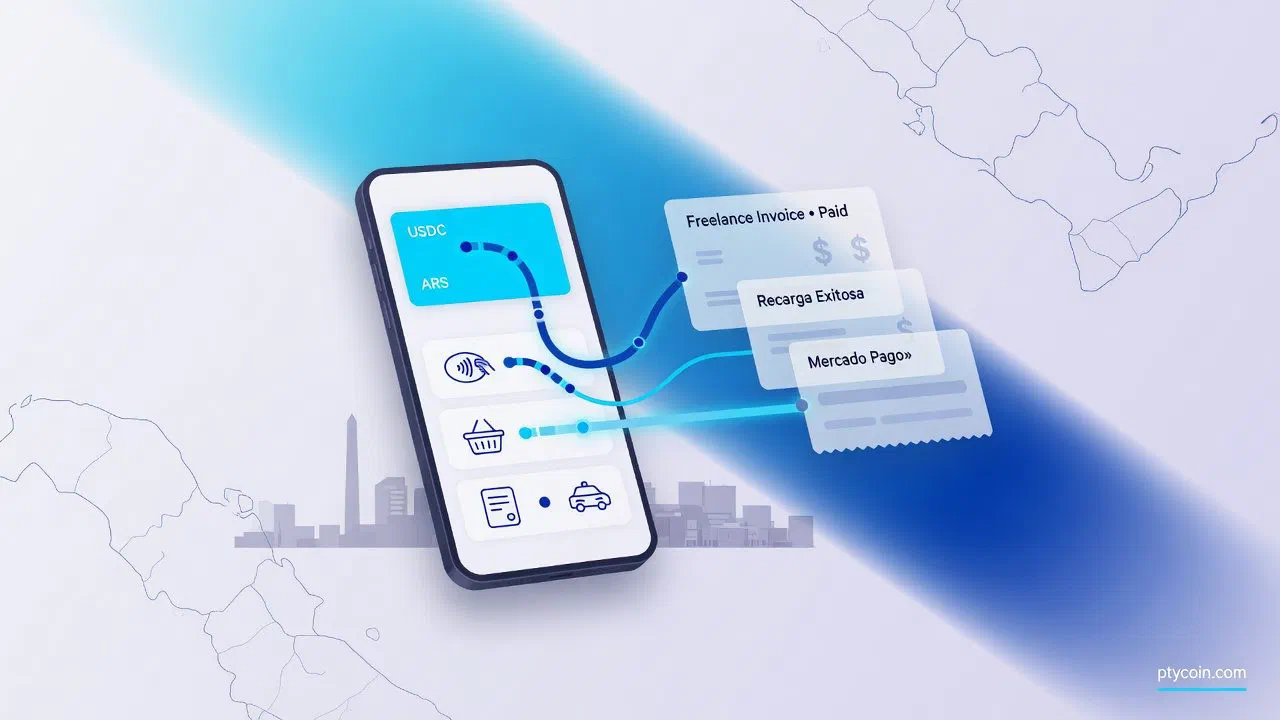
Belo packages the receive, hold, convert, and spend steps into one mobile app. It keeps the stablecoin rails in the background while the interface speaks the languages and payment methods users already know in their countries.
How Belo works
The app is built for people who earn abroad or move between currencies frequently. Core capabilities include:
Multi-currency balances: Hold Argentine pesos (ARS), Brazilian reais (BRL), and other fiat alongside cryptocurrencies and stablecoins such as BTC, ETH, SOL, USDT, and USDC. Some corridors also surface USD, EUR, or GBP balances depending on inflows.
Receiving international payments: Connect payouts from platforms including Wise, Deel, Payoneer, PayPal, Upwork, Airbnb and others. Funds often land as digital dollars or can be converted on receipt. A payment-link feature lets family or clients send from services like Cash App in the U.S. directly into the wallet.
Instant exchange and P2P: Swap between supported assets at displayed rates inside the app. A belotag makes peer transfers simple between users.
Sending crypto outward: Users can send cryptocurrencies to external wallet addresses. The help center documents the flow: Transfer → new contact → Cryptocurrencies. This gives an on-ramp to self-custody when desired.
Spending locally and abroad: A prepaid Belo Mastercard (sometimes referenced with LUX branding in announcements) lets users spend balances where cards are accepted, with some reports of cashback in digital assets. In-app QR payments work at merchants in Argentina and unified flows now cover Brazil as well. Pix support in Brazil and bill pay round out local utility.
Travel and cross-border sends: Features aimed at travelers include paying in local currency while traveling and sending value to Europe, the U.S., and other LatAm countries.
Belo Argentina S.A. is registered as a Virtual Asset Service Provider (PSAV No. 52) with Argentina’s CNV since July 2024 for reporting purposes. The company states it maintains 24/7 human support through the app. App-store ratings are strong: around 4.8 on Google Play and 4.3 on the App Store from tens of thousands of reviews. The product is live in multiple LatAm markets with plans, post-raise, to deepen Brazil and enter Mexico, Chile, Colombia, Peru, Bolivia, and Paraguay.
CEO and co-founder Manuel Beaudroit has described reaching this funding round after three years of profitable operations: “This round is about scaling.”
Analysis: reach, model, and honest caveats
Belo’s growth and the Tether-led raise highlight demand for tools that make stablecoin utility feel ordinary rather than technical. By combining inbound rails used by global payroll and freelance platforms with local spend methods and a card, the app targets a concrete user: someone who receives dollars or stables from abroad and needs to pay rent, buy groceries, or travel without constant conversion losses or banking headaches.
The custody model is the central design choice and the main caveat. Belo is a custodial wallet for balances kept inside the app. The service safeguards the private keys that control those holdings and provides the familiar mobile interface. This makes onboarding and daily use simpler for people who do not want to manage seed phrases or sign transactions themselves. At the same time, the documented ability to send crypto to external addresses means users can move holdings to a self-custody wallet whenever they choose. For larger balances or longer-term storage, that step reduces counterparty risk.
Other practical caveats:
Feature and corridor depth still varies by country. Not every payment method or card function is available everywhere, and the announced expansion targets mean some markets are future rather than current.
Stablecoin exposure is real. Primary holdings are USDT and USDC. While both have track records and attestations, they remain subject to issuer, regulatory, and market risks. Belo itself does not control those issuers.
Fees exist for conversions, withdrawals, card loads or foreign transactions, and any premium FX. Users must check current schedules inside the app for their specific flows; competitiveness depends on the corridor and alternative options.
Compliance and limits apply. As a registered VASP/PSAV the company follows KYC, AML, and reporting rules. Account limits, verification tiers, and supported networks can affect large or unusual activity.
Competition is active from other LatAm wallets, neobanks, and superapps that offer overlapping stablecoin, card, or remittance features. Belo’s edge will depend on rate quality, reliability of inflows, card acceptance, and continued regional rollout.
Public metrics on active users and volumes post-raise remain high-level. App-store download numbers and funding materials give direction but independent verification is limited.
The strategic Tether investment aligns the company with one of the largest stablecoin issuers and may ease liquidity or integration paths, but it also concentrates attention on that relationship.
Takeaway
Belo shows one working model for bringing crypto rails into daily financial life in Latin America: a convenient custodial interface layered on top of stablecoins and on-chain movement, paired with the card and local-rail handoffs people actually use to spend. For freelancers receiving international income or anyone who wants dollar-linked value without the full overhead of traditional foreign banking, the product reduces steps that used to require several services.
It is not a pure self-custody solution and does not eliminate risk. Users who value full control should treat the app primarily as a convenient on-ramp and spending layer, then withdraw crypto holdings they want to secure long-term into wallets where they alone control the keys. Stablecoin and counterparty considerations still apply, as do the usual fintech risks around availability, fees, and regulatory changes across jurisdictions.
Not financial advice. Compare Belo directly to your current flows, review supported countries and networks in the app, read the terms and risk notices, and size any holdings to what you are comfortable leaving with a custodian. For most people the test is simple: does it reliably receive the payments you get and let you spend or save without excessive friction or surprise costs? Check the current state of the product yourself.
Sources
- CoinDesk reporting on the April 2026 Series A (Tether leads Belo’s $14 million raise to expand stablecoin payments across Latin America)
- belo.app site, blog, and regional pages
- Belo Help Center: articles on wallets, sending cryptocurrencies to external wallets, deposits, transfers, cards, and security
- App Store and Google Play listings and recent update notes
- Funding coverage and announcements: LatamList, TechFundingNews, LinkedIn posts from the team
- Company regulatory note on PSAV registration with CNV Argentina