

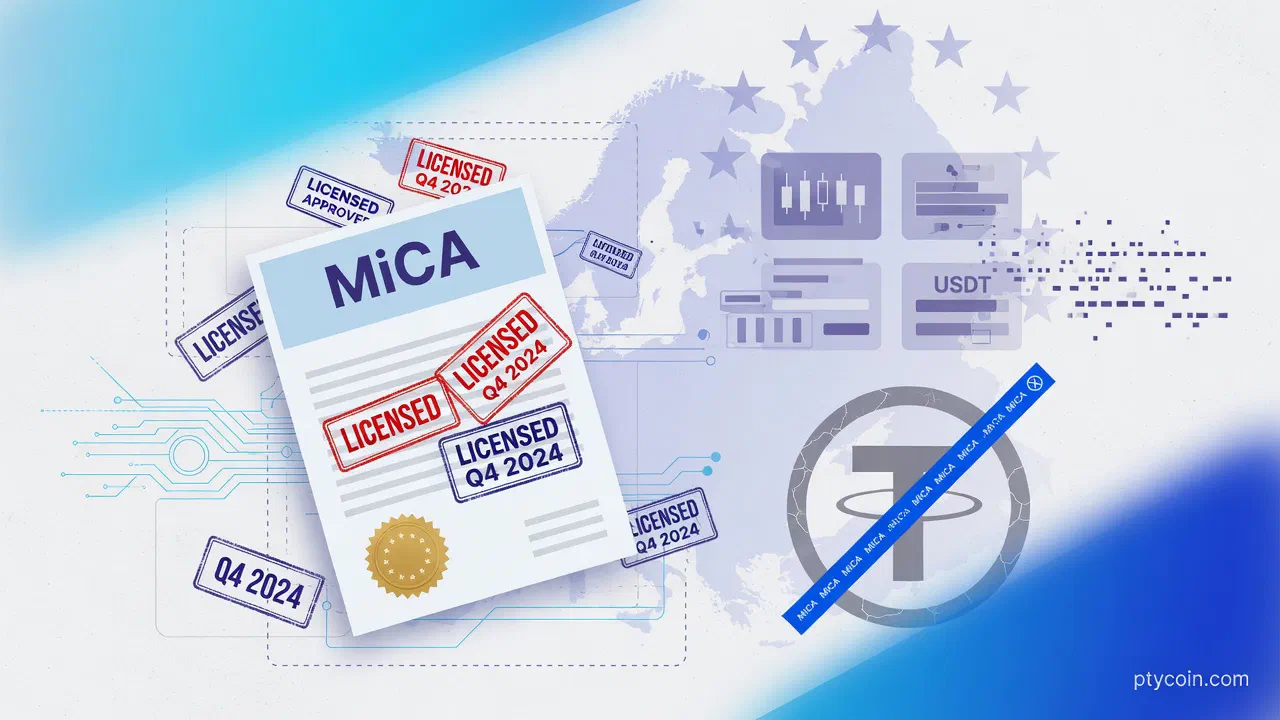
Europe’s long-awaited crypto rulebook just became enforceable. On July 1, 2026, the MiCA transition period ended — and platforms without a Crypto-Asset Service Provider (CASP) license can no longer legally serve EU customers. The first high-profile casualty is already unfolding: Revolut is phasing out Tether’s USDT for European users, pushing them toward MiCA-compliant alternatives like USDC.
What MiCA changes today
MiCA (Markets in Crypto-Assets) is the EU’s unified framework for licensing, disclosure, custody, and consumer protection across crypto services. Firms that operated under older national registrations had until July 1 to obtain a full CASP authorization or stop serving European users.
The deadline was not theoretical. Finance Magnates tested several major exchanges on day one and found unlicensed platforms already blocking new EU signups, freezing deposits, or shifting accounts to withdrawal-only mode. Industry estimates suggest a large share of crypto firms still lacked full authorization as the clock ran out — though exact counts vary by jurisdiction and application status.
On the compliant side, the EU has approved dozens of licensed firms, including banks like Standard Chartered and established exchanges that secured CASP passports. Licensed platforms can operate across member states under a single authorization — a meaningful competitive advantage as rivals retreat or restrict.
Why Revolut delisted USDT
Stablecoins face some of MiCA’s strictest requirements. Issuers must hold adequate reserves, publish regular attestations, and obtain an e-money token (EMT) authorization to offer dollar- or euro-pegged coins to EU retail users. Tether’s USDT — the world’s largest stablecoin by market cap — has not secured that EU authorization, while Circle’s USDC and other MiCA-aligned issuers have.
Revolut’s move follows a pattern already visible across European fintech: platforms are pruning token lists to match what their CASP license actually covers. Users holding USDT inside Revolut can buy it until July 6 and sell or withdraw to an external wallet until August 31; any balance left after that date is automatically converted to fiat.
The bigger platforms face the same pressure. Binance has maintained EU ambitions but has not secured a blanket CASP passport, leaving its European service footprint uncertain. Crypto.news reported Binance facing a lockout risk as the deadline passed — a development worth watching, though Binance has not confirmed a full EU exit.
What this means beyond Europe
For most Latin American users, day-to-day stablecoin access through local exchanges and fintech apps is unchanged. Brazil, Argentina, Mexico, and other regional markets run on their own regulatory calendars — and USDT remains deeply embedded in LatAm payment rails, from Pix integrations to cross-border remittance corridors.
The divergence still matters. Europe is effectively standardizing on MiCA-licensed stablecoins while LatAm continues building frameworks on a different timeline — Brazil’s BCB VASP rules, Argentina’s push to let banks hold crypto, Panama’s fintech licensing. When the same asset (USDT) is freely available in São Paulo but delisted in Madrid, you get a preview of how fragmented global crypto regulation can become.
That split creates practical friction for anyone straddling both worlds: LatAm professionals working in Europe, students abroad, or families sending remittances through EU-based apps. A stablecoin that works at home may not be available on the platform you use overseas — and the workaround is rarely as simple as switching apps if your bank account, tax residency, or KYC profile is tied to the EU.
For self-custody advocates, the enforcement wave is also a reminder. When exchanges geo-block, delist tokens, or freeze new deposits, the only guaranteed exit is a wallet you control. MiCA is designed to protect consumers on licensed platforms; it does not eliminate counterparty risk on the ones that fail to comply and wind down services on short notice.
The takeaway
July 1 was the day Europe stopped grandfathering crypto firms under old national rules. Licensed platforms gain a passport; unlicensed ones must restrict, restructure, or leave. Revolut dropping USDT is the first high-profile token casualty — and it will not be the last as issuers and exchanges align their product lists with what MiCA actually permits.
If you hold crypto on any EU-facing platform, check whether your provider holds a CASP license, which tokens remain listed, and what happens to balances in assets scheduled for delisting. None of this is financial advice — but ignoring a regulatory deadline that platforms have had years to prepare for is a poor substitute for reading the notices in your account settings.
Primary sources