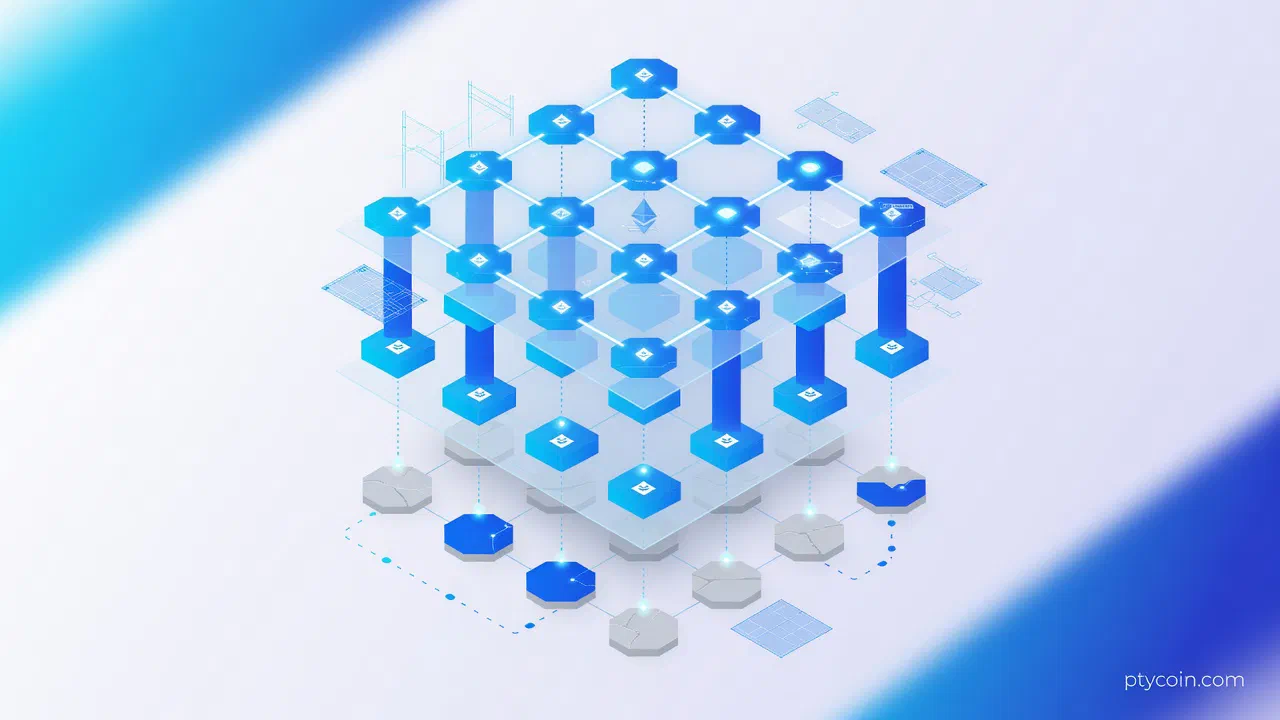
Vitalik Buterin spent the July 4 weekend laying out what he calls Ethereum’s biggest rebuild since the Merge — a refreshed Lean Ethereum roadmap that would replace nearly every major layer of the protocol over the next three to four years. The plan elevates post-quantum cryptography and on-chain privacy from research sidelines to core priorities, while promising to keep today’s apps running through incremental upgrades rather than a hard break.
Where Lean Ethereum came from
The Lean Ethereum vision is not brand-new. Ethereum Foundation researcher Justin Drake unveiled the concept in July 2025 as a ten-year mission to marry extreme performance with “fort mode” security — surviving nation states and quantum adversaries — and “beast mode” scale, targeting gigagas throughput on the base layer and teragas on rollups. The public tracker at leanroadmap.org has since logged post-quantum devnets, hash-based signature benchmarks, and multi-client interoperability tests.
What changed over the holiday weekend is the packaging. CoinDesk reported on July 6 that Buterin published an updated roadmap describing Lean Ethereum as Ethereum’s third major act — after the 2015 proof-of-work launch and the September 2022 Merge to proof-of-stake. Crypto Briefing’s July 5 summary frames the same document as a coordinated plan developed with Drake, with full post-quantum signature deployment targeted for 2029.
What the overhaul actually covers
The roadmap attacks three problems at once: protocol complexity, weak default privacy, and quantum-vulnerable cryptography.
On consensus, Lean Ethereum proposes a redesigned beacon chain hardened for faster finality and deeper decentralization — sometimes described as “beacon chain 2.0.” Post-quantum work is not theoretical: leanroadmap.org lists completed post-quantum devnets through early 2026, with hash-based signature schemes (leanSig, leanMultisig) already integrated into multiple experimental clients.
On data, the plan envisions “blobs 2.0” — post-quantum data-availability commitments and more granular blob sizing so developers get a calldata-like experience without paying full L1 gas for every byte.
On execution, Lean Ethereum targets an EVM 2.0 stack built around SNARK-friendly instruction sets. Drake’s original post floated RISC-V as a possible execution backbone while preserving EVM compatibility. The July revision goes further: Crypto Briefing reports that researchers are also exploring a custom architecture called leanISA, with a longer-term path that could eventually move beyond today’s Ethereum Virtual Machine entirely — a migration risk for every DeFi protocol and NFT contract already deployed.
Cross-cutting upgrades include recursive STARK verification to lighten proof checking, a multidimensional gas pricing model that bills different computational resources separately instead of one blended fee, and expanded state capacity — projections of roughly 2 TB of dynamic state and a 100 TB total state model by 2030, per Crypto Briefing’s reading of the roadmap. Near-term milestones still ride the existing upgrade train: CoinDesk notes upcoming forks like Glamsterdam and Hegotá as stepping stones before the deeper rebuild lands.
Why the timing matters now
The roadmap arrives as ether has rallied more than 12% over the past seven days, per CoinDesk’s market context — a price move that reflects positioning and sentiment, not a finished upgrade. Separately, the Ethereum Foundation cut its budget by roughly 40% and reduced headcount by about 20% (54 roles) in June 2026, a restructuring that coincides with a leaner operational posture even as the technical ambition grows.
For builders and holders, the message is continuity with ambition: Ethereum proved it could execute the Merge without halting the chain, and Lean Ethereum is framed as the same style of multi-year construction — predictable milestones rather than one cliff-edge deadline. The risk is execution friction. Any path beyond the EVM implies backward-compatibility layers, developer retooling, or both. Privacy and quantum upgrades also touch wallet infrastructure: self-custody tools that sign transactions today with elliptic-curve keys will eventually need post-quantum migration paths, and users who rely on transparent on-chain activity may see new default-private rails that change how compliance and auditability work.
LatAm builders on the same rails
Latin America does not run a separate Ethereum — but it runs a disproportionate share of the activity that Lean Ethereum is trying to scale and harden. Stablecoin settlement, freelancer payouts, and DeFi liquidity across Brazil, Argentina, and Mexico overwhelmingly settle on Ethereum mainnet or its rollups. When the base layer commits to a three-to-four-year rebuild of consensus, data, and execution, LatAm fintechs and protocol teams inherit both the upside (cheaper proofs, more state headroom, better privacy defaults) and the migration risk (EVM evolution, wallet upgrades, changing fee mechanics).
That dependency is why a roadmap post from Buterin over a U.S. holiday weekend still lands as operational news for regional developers shipping on Arbitrum, Base, or mainnet — not just as Silicon Valley protocol theater. Wallets, bridges, and payment apps that serve LatAm users will need lead time to adopt post-quantum signing and any new privacy primitives. The self-custody lesson is unchanged: protocol upgrades reduce systemic risk over years, but your keys and your software stack still need active maintenance as cryptography and execution environments shift underneath you.
The takeaway
Lean Ethereum is Ethereum betting on another generational refactor — simpler cryptography, stronger privacy, quantum-resistant defaults, and enough state capacity to carry DeFi and tokenized assets through the 2030s. The July 4–6 roadmap refresh makes that bet explicit and timed: three to four years, post-quantum signatures by 2029, and a protocol stack rebuilt layer by layer.
If you build on Ethereum or hold assets secured by its contracts, treat this as a long-horizon planning signal, not a trade trigger. Watch devnet progress on leanroadmap.org, follow how near-term forks deliver capacity before the deep rebuild arrives, and keep wallet software current as post-quantum standards solidify. None of this is financial advice — but ignoring a multi-year protocol roadmap from Ethereum’s co-founder is a poor substitute for understanding what infrastructure your apps and balances actually depend on.
Primary sources