
The Office of the U.S. Trade Representative (USTR) said on July 15, 2026 that it is imposing a 25% tariff on certain goods of Brazil under Section 301 of the Trade Act of 1974, after a yearlong investigation that put digital trade and electronic payment services (including preferential treatment of Brazil’s state-run Pix instant-payment system) among the practices Washington calls unfair.
What USTR actually ordered
Per USTR’s press release, Ambassador Jamieson Greer is taking “final action” at President Trump’s direction: a 25% duty on certain Brazilian goods, not a blanket tax on every import. The probe, opened July 15, 2025, covered digital trade and electronic payments, preferential tariffs, anti-corruption enforcement, intellectual property, ethanol market access, and illegal deforestation. USTR says it held two public hearings, took more than 360 written comments, and consulted with Brasília without resolving the listed concerns.
Trade counsel and logistics firms tracking the Federal Register notice say the new duties are set to take effect at 12:01 a.m. EDT on July 22, 2026, with product lists and exemptions (including, in secondary reports, coffee, beef, energy products, and aircraft parts) still the document importers must check line by line. This is not a tariff on crypto tokens. It is a goods tariff whose legal findings reach into how Brazil runs payments and digital commerce.
Why Pix is in the findings
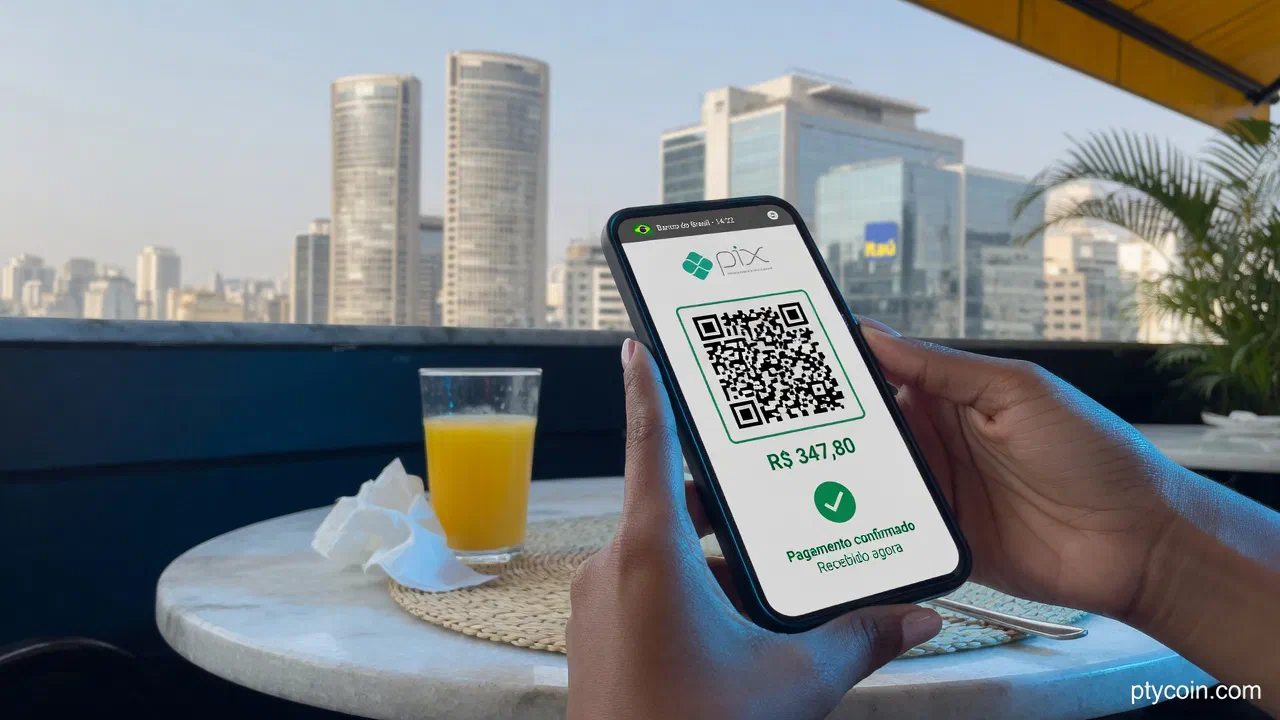
Pix, launched by the Banco Central do Brasil (BCB) in 2020, is free for most individuals, near-instant, and used by the large majority of Brazilian adults for everyday transfers. U.S. card networks and other electronic-payment suppliers have long argued that rules favoring Pix (availability, visibility, and fee design) squeeze foreign competitors in a market where Pix now handles more domestic payment volume than cards.
USTR’s investigation materials treat preferential treatment of Pix as part of the “digital trade and electronic payment services” case: requiring competitors to accommodate a national champion while that champion enjoys structural advantages, in Washington’s view, burdens U.S. commerce. Brazilian officials and regional press have cast the fight differently: Pix as public infrastructure that cut cash use and card fees, and as a system other countries study rather than a trade weapon. The July 15 final action freezes that dispute into a goods tariff while negotiations, USTR says, remain open.
The stablecoin irony on the same rails
While Washington frames Brazilian payment design as a threat to dollar-linked trade channels, dollar-linked stablecoins already sit at the center of Brazil’s reported crypto activity. CoinDesk reporting on the tariff news notes that dollar stablecoins account for roughly 90% of crypto transaction volume in Brazil in tax-authority data summarized earlier by the same outlet, with much of that flow used for payments and settlement rather than pure trading. Independent analysis of 2025 Federal Revenue figures has put stablecoins near 80% of declared crypto volume for the full year, with USDT the dominant dollar token inside that share.
That split matters for how you read the story. Pix is real-time BRL rails inside the domestic banking system. Stablecoins are private dollar claims that move on public chains and through exchanges, P2P desks, and fintechs when users want a dollar unit, cross-border speed, or a hedge outside the banking hours Pix lives in. A Section 301 goods tariff does not seize USDT in a self-custody wallet, and it does not rewrite BCB VASP rules. It does raise the political temperature around anything that looks like an alternative to U.S. card networks, or to the dollar’s role in trade finance, even when the on-chain dollar is already the default unit of Brazil’s crypto stack.
Brazil’s own regulatory path is already tightening around those rails: VASP authorization clocks, DeCripto-style reporting, and treatment of some stablecoin transfers under foreign-exchange rules. Readers who hold or accept USDT/USDC in Brazil still need to separate three layers: (1) trade policy aimed at goods and payment-system preference, (2) domestic crypto supervision, and (3) key custody and venue risk you control yourself.
Takeaway
USTR’s July 15 order is a concrete 25% Section 301 tariff on listed Brazilian goods, timed for July 22, after findings that include digital trade and preferential treatment of Pix. The crypto angle is the contrast: official Washington pressure on Brazil’s public instant-payment design arrives in a market where dollar stablecoins already dominate reported crypto volume as payment and settlement tools. Watch the product lists, any bilateral talks that follow, and how Brazilian regulators keep drawing lines between Pix, bank FX, and on-chain dollars, not a price chart.
This is trade and payments infrastructure news, not a call to buy, sell, or reallocate any asset. Not financial advice.