
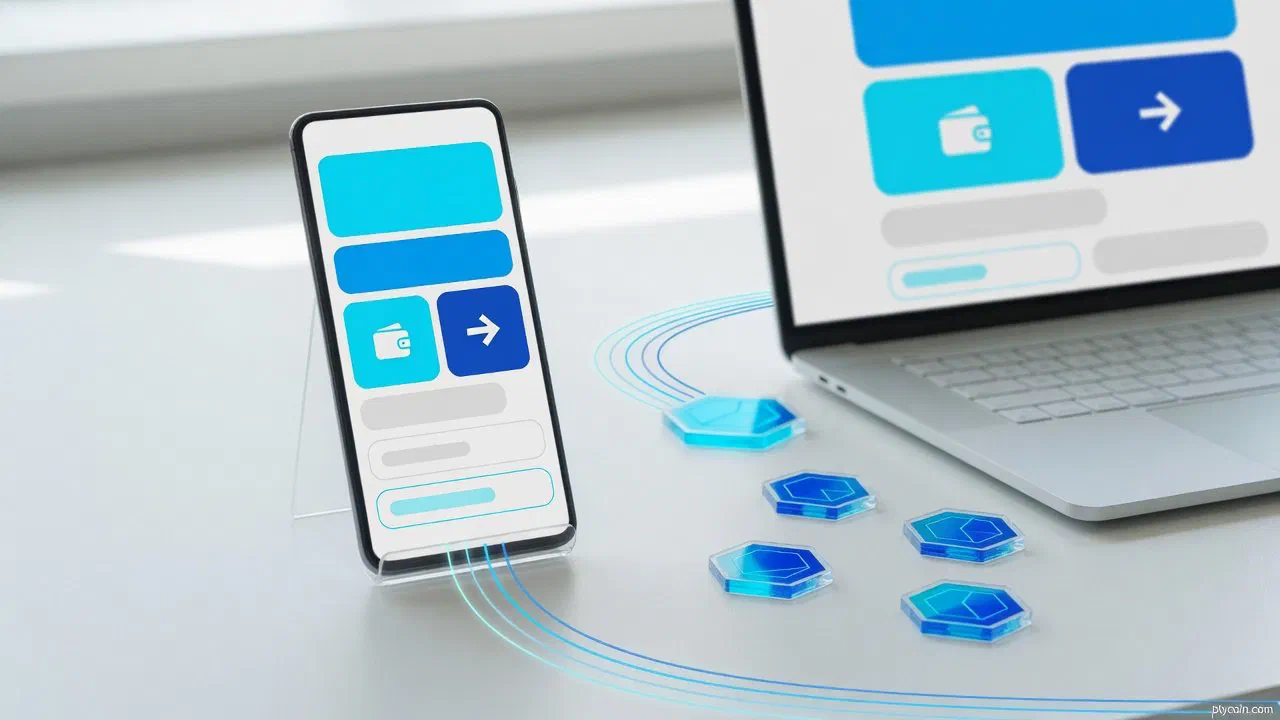
Circle ships Gateway as a developer primitive, not a retail wallet screen: deposit native USDC into non-custodial Gateway Wallet contracts, then mint that same economic balance on another supported chain in under 500 milliseconds after the balance is established. For exchanges, payment service providers, onramps, custodians, and wallet infrastructure teams, the pitch is blunt. Stop pre-positioning idle USDC on every chain users might withdraw to, and stop treating cross-chain USDC as a slow inventory problem.
What Circle actually built
Gateway is a unified USDC balance that sits across multiple blockchains. You deposit native USDC into a Gateway Wallet contract on a supported source chain. Once that deposit is finalized and credited, Circle’s offchain Gateway system tracks a single available balance. A signed burn intent plus a Gateway attestation then lets a Gateway Minter contract mint USDC on a destination chain while the matching amount is burned on the source side. Circle’s product page and developer docs both put the post-balance transfer latency at under 500 ms.
That is different from “I clicked bridge and waited for finality.” Finality is front-loaded into the deposit. After the balance exists, spend can target any supported destination without another multi-minute wait in the middle of a user flow. Circle also publishes a Unified Balance Kit so product teams can wire deposit, transfer, and spend without rebuilding the full contract choreography from scratch. Integration is permissionless: no Circle account is required to start.
As of Circle’s supported-blockchains reference (checked July 2026), Gateway mainnet covers 13 chains: Arbitrum, Arc, Avalanche, Base, Ethereum, HyperEVM, OP Mainnet, Polygon PoS, Sei, Solana, Sonic, Unichain, and World Chain. Deposits still wait for chain-specific confirmations before the unified balance updates (roughly seconds on Avalanche, Solana, or Polygon PoS, and on the order of 13–19 minutes for Ethereum and several L2s that inherit Ethereum finality). Instant is the transfer step after that credit, not the first deposit.
Gateway vs CCTP vs classic bridges
Circle already runs CCTP (Cross-Chain Transfer Protocol): burn native USDC on chain A, mint native USDC on chain B, with no wrapped IOU sitting in a bridge vault. CCTP remains the right tool when the job is a point-to-point move. Circle’s own comparison says Fast Transfer settles in roughly 8–20 seconds, while Standard Transfer waits on source-chain finality (often many minutes on Ethereum and related L2s).
Gateway is the balance product. CCTP is the transfer product. You use Gateway when an app needs capital sitting ready and spendable on any of a set of chains without forecasting which one will need inventory next. You use CCTP when you know the route (A to B) and want canonical native USDC without third-party pool risk. Classic lock-and-mint bridges are a third category: they hold inventory and issue derivatives, which is why bridge drains keep showing up in security news. Gateway and CCTP both aim at native USDC rather than wrapped copies, but they still depend on Circle-operated attestation systems and on contract code that must stay sound.
For readers who live the retail wrong-network problem every week (USDT on Tron vs USDC on Base, gas on the wrong chain, funds stuck because the exchange only lists one rail), our network-picking guide still applies today. Gateway is the infrastructure path that could make the network dropdown less punishing for USDC if the apps you use integrate it. Until your exchange or wallet does, you still match sender withdraw chain to recipient receive chain yourself.
Who is supposed to adopt this
Circle’s mainnet launch write-up names the buyers plainly: onramps and PSPs that want to serve more chains with less idle capital; exchanges that want USDC withdrawals without rebalancing delays; custodians offering clients multi-chain access; wallets that want one chain-abstracted USDC number in the UI; and solvers / trading firms that want liquidity on demand. Launch-partner names in that post include Aori, BlockRadar, Daimo Pay, Dfns, Eco, Fireblocks, Particle Network, Rath Finance, RockawayX, Superform, and others.
Fireblocks is a useful concrete example. Its July 2026 integration post describes a USDC Virtual Wallet that aggregates balances across supported chains into one account: less per-chain pre-funding, automatic deposit into the Gateway balance, and cross-chain moves that do not depend on holding gas tokens on every destination. That is treasury plumbing for institutions, not a consumer “send to friend” button. Yet the rails freelancers, remittance apps, and P2P dollar apps ride sit one layer above this kind of plumbing. When a LatAm-facing exchange or payout platform cuts working capital and serves Base, Solana, and Polygon from one float, the user experience that improves is the one people in high-inflation or multi-currency markets already care about: get digital dollars on the chain their counterparty can actually use, without a multi-day rebalance behind the scenes.
Fees, custody, and what can still go wrong
Circle’s fee schedule currently lists a 0.5 basis point (0.005%) transfer fee on cross-chain spends, deducted from the unified balance at burn time, plus a gas fee in USDC that varies by source chain (examples in the docs: $0.01 on Base or Arbitrum, $0.15 on Solana, $1.00 on Ethereum). Same-chain withdrawals skip the 0.5 bps transfer fee and only pay burn gas. Optional Forwarding Service minting adds a flat $0.05 service fee plus destination gas. Circle’s marketing site previously framed 0.5 bps as early-access pricing through June 30, 2026; the live developer fee page still documents 0.5 bps as the transfer fee at the time of writing. Always re-check docs before you model unit economics.
On custody, Circle’s technical guide is careful: USDC in Gateway Wallet contracts stays under depositor control in the sense that Circle cannot move or burn it without a user-signed burn intent. Instant access still requires both that signature and a Gateway attestation. If the Gateway API is down, users can start a trustless withdrawal onchain and complete it after a 7-day delay. That is a real recovery path, and it is also a real UX cost if something fails during a live payout. Smart contract accounts need an EOA delegate to sign burn intents; a delegate is a high-privilege key over deposited USDC on that wallet contract. Circle points to third-party audits from ChainSecurity and OtterSec. Audits reduce risk; they do not erase it.
The concentrated-risk framing is the honest one. Funds sit in shared wallet contracts and depend on Circle’s offchain attestation system for instant paths. That is a different failure mode from a classic bridge LP pool (Allbridge Core’s July 19, 2026 flash-loan drain was about pool math and liquidity pricing), but it is still program and operator risk, not “cash in a bank vault with FDIC stickers.” Direct ERC-20 transfers to the Gateway Wallet address (instead of the proper deposit methods) are called out as a loss path in Circle’s docs. For long-term savings you control yourself, Gateway is not a substitute for keys you hold offline. For operational float that must be multi-chain and fast, it is Circle’s attempt to make native USDC feel chain-abstracted without asking every app to invent its own inventory layer.
The so-what
Circle Gateway is infrastructure for people who ship money products: one USDC float, many chains, sub-second mint after the balance exists, and a permissionless integration surface. It will not delete the network dropdown in your exchange app this weekend. It will matter earlier for the platforms that already move remittances, contractor pay, and treasury USDC across Latin America and the rest of the multichain map. If they adopt it, users inherit fewer wrong-chain failures and thinner spreads from idle inventory. Treat it as a product to evaluate with docs, fees, audit reports, and the 7-day exit path in mind, not as a free upgrade already live in every wallet. This is analysis of a payment primitive, not a recommendation to deposit, trade, or reallocate funds.