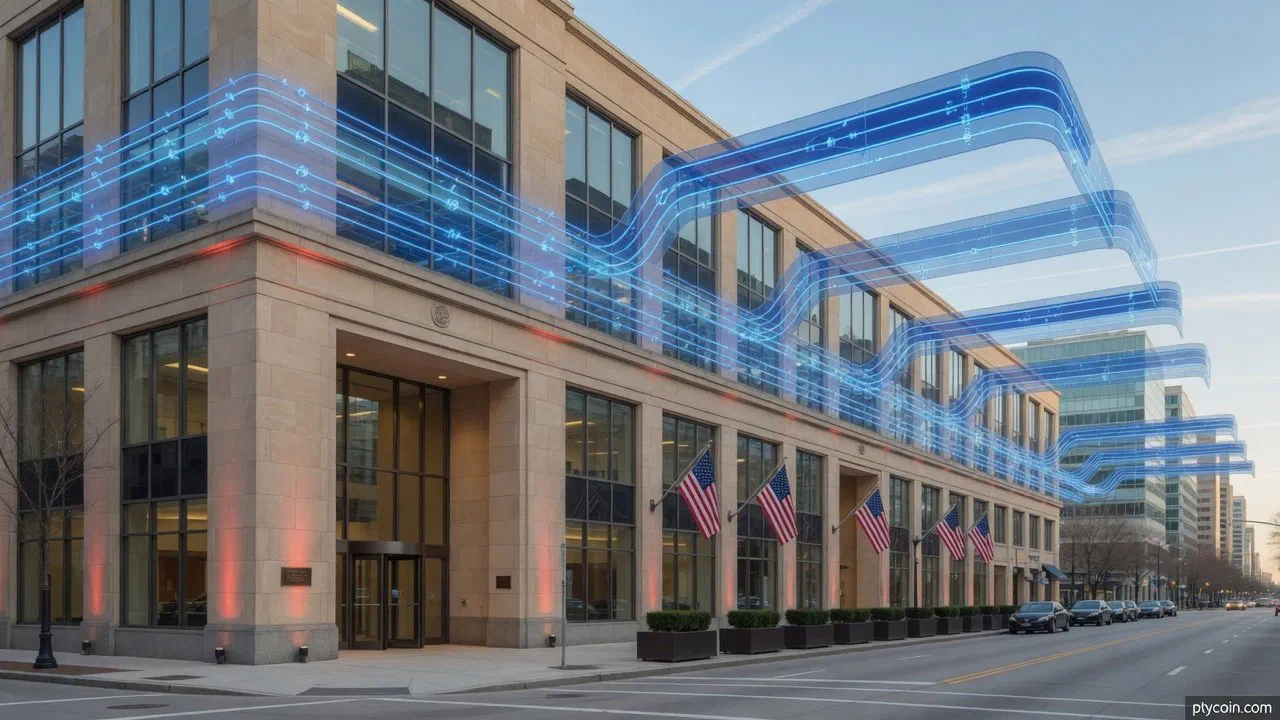
Wells Fargo on August 4, 2026 said it will launch tokenized deposits for select corporate and commercial clients this fall, starting with a limited U.S. dollar to British pound corridor on the bank’s proprietary blockchain.
What the bank is shipping
In its newsroom release, Wells Fargo described tokenized deposits as a blockchain representation of commercial bank money that, when fully deployed, lets clients move, program, and settle funds 24/7/365 without leaving the regulated, insured banking system. The fall pilot is narrow: eligible USD–GBP transactions for participating Corporate & Investment Banking and Commercial Banking clients. A broader rollout (more clients, countries, and currencies) is planned through 2027.
CFO Mike Santomassimo cast the product as faster cross-border movement on rails the bank already runs: clients keep the same Wells Fargo interface, and the bank says eligible payments will auto-route through tokenized deposits when that path improves speed or timing. Future enhancements listed in the release include always-on settlement between accounts, subsidiaries, or counterparties (including weekends and holidays), conditional payments released by smart-contract logic, and the same regulatory protections and deposit-insurance eligibility as ordinary Wells Fargo deposit products.
Secondary coverage from American Banker, CoinDesk, and The Defiant matched those core facts the same day. The bank did not name the chain, say whether the ledger is public or permissioned, or publish volume targets for the pilot.
Deposit tokens, not stablecoins
A tokenized deposit is still a claim on Wells Fargo. The dollar (or pound) sits on the bank’s balance sheet; the token is the on-chain label for that liability. That is a different product from USDC or USDT, which are issued by non-bank entities against reserves and can live in self-custody wallets anyone controls.
Wells Fargo is explicit about the frame: clients stay inside commercial bank money and the bank’s custody model. In-house custodial wallets and “inter-chain connectivity” show up as capabilities the proprietary platform can support later, not as the fall launch. For readers who already move dollars on-chain, the practical distinction is custody and counterparty: here the bank holds the keys and the deposit relationship; with a self-custodied stablecoin, you hold the keys and take issuer and chain risk instead of bank-deposit risk.
That competition is the point. Big banks have watched stablecoin float grow while corporate treasurers test 24/7 settlement outside weekend wire windows. Wells Fargo’s product is one bank’s answer: keep the programmability and continuous settlement, keep the funds as insured bank deposits (subject to the usual eligibility rules), and keep the client inside Wells Fargo Vantage-style workflows rather than a separate crypto app.
Proprietary now, shared rail later
This is not the same announcement as June’s bank-led Clearing House network. That coalition (JPMorgan, Citi, Bank of America, Wells Fargo, and more than a dozen peers) aims for interbank clearing of tokenized deposits and links to RTP and CHIPS, with a target around the first half of 2027. Tuesday’s product is Wells Fargo’s own ledger and client stack, shipping months earlier on a single-bank path.
American Banker noted the interoperability problem: deposit tokens stuck on isolated private chains have limited utility until banks can settle with each other. Wells Fargo’s release nods at that future with “inter-chain connectivity technology” for later offerings, while CEO Charlie Scharf told CNBC that clients are asking about tokenization more out of curiosity than proven demand. Both can be true: product shipping starts the learning cycle; shared rails decide whether those tokens become industry plumbing or a closed club.
JPMorgan’s institutional deposit token on Coinbase’s Base network is the farthest-along U.S. peer product; Citi and others have private-chain programs too. Wells Fargo is late relative to that pack but early relative to the multi-bank Clearing House build. Fall 2026 USD–GBP is a corridor test, not a claim that every corporate treasury now runs on-chain.
Who this reaches (and who it does not)
Latin American freelancers, merchants, and savers who already live on USDT and USDC will not see this product in a phone wallet. It is corporate treasury infrastructure for clients already banked at Wells Fargo, starting on a U.S.–U.K. FX path. The regional read is competitive context, not a retail on-ramp: when major U.S. banks put programmable dollars on bank balance sheets, the long game is who settles cross-border B2B and trade flows (and on whose terms).
Companies in the region that already hold Wells Fargo accounts for trade or multi-currency cash management are the first possible touchpoint. Everyone else keeps using the rails that work today: stablecoin wallets, local fintechs, and card-network stablecoin settlement experiments such as Mastercard’s closed BVNK deal. Self-custody remains the model for users who want keys they control; tokenized bank deposits are the opposite stack, optimized for regulated corporates and bank risk frameworks.
Watch three checkpoints before treating the news as fully live:
- Pilot proof: which corporate clients and payment types actually move on the USD–GBP path this fall.
- 2027 expansion: which currencies and markets open, and whether “all eligible clients” means broad Commercial Banking or a still-select CIB tier.
- Interbank link: whether Wells Fargo’s proprietary tokens ever clear against peers on The Clearing House network once that build ships.
Takeaway
Wells Fargo will put tokenized commercial bank deposits in front of select corporate clients this fall, beginning with automatic USD–GBP routing on a proprietary chain and a wider multi-currency push through 2027. It is bank money with on-chain settlement hours, not a retail stablecoin, and it sits beside (not instead of) the multi-bank Clearing House plan for interbank rails next year.
For most readers, this is infrastructure news about how large banks plan to keep corporate cash on deposit while matching stablecoin-style speed. It is not a product to buy, trade, or rebalance around. Not financial advice.