
A hardware wallet has one foundational job: generate a private key nobody can guess, and keep it away from your computer. In July 2026 that assumption broke in public. Coldcard devices built seed phrases from a weak source of randomness, and attackers reconstructed thousands of keys without ever touching the hardware.
That failure deserves a serious response. Moving your coins back onto an exchange is the wrong one. The better answer is a setup that no single company’s mistake can empty.
It builds on self-custody 101, seed phrases explained, and hardware wallet form factors, which cover getting started.
Practice before you commit funds. Several steps below create new wallets and move real money. Test every one with a small amount first, and never delete an old backup until the new setup is proven.
Two kinds of risk, and who absorbs them
Leave coins on an exchange and you carry counterparty risk. The exchange holds the keys. You hold a database entry saying the exchange owes you. That risk is total, because when the company fails your whole balance is exposed. It is correlated, because it fails for every customer on the same day. And it is legal rather than technical: in a bankruptcy you become an unsecured creditor, waiting years behind secured lenders for a fraction of your deposit.
Hold your own keys and you carry operational risk instead. You can lose a backup. You can be tricked into signing something. Your device vendor can ship a bug. Those failures are narrower. They hit one person at a time, they usually have a nameable cause, and most can be engineered against in advance. Counterparty risk cannot be engineered against by you at all. You only choose whether to accept it.
One honest caveat: if you hold a small amount and expect you would lose a paper backup, a reputable custodian may serve you better than a seed phrase in a drawer. Match the setup to the amount and to the effort you will sustain. This is security practice, not financial advice.
What you trust when you buy a signing device
A signing device isolates your private key and signs transactions without exposing that key to a networked computer. The gain is genuine. It also carries trust assumptions most buyers never inspect. When you press “create new wallet,” you are trusting the device’s randomness, its firmware build, and the supply chain that delivered it.
The Coldcard incident broke the first one. Seed generation fell through to a software pseudo-random generator instead of the chip’s hardware randomness source, cutting effective entropy far below the 128-bit target that makes a seed unguessable. Attackers rebuilt candidate keys offline and matched them against funded addresses on the public blockchain. No physical access, no phishing, no malware on your laptop. We reported the initial advisory and the multi-wave sweeps as they unfolded.
One property of that failure should change how you build: you cannot audit entropy after the fact. A seed from a broken generator looks identical to one from a flawless generator. Ordinary words, valid checksum, working addresses. No test you can run at home tells them apart. So build for the second-best outcome: assume any vendor can fail, and arrange things so one failure cannot reach everything you hold.
Tier 1: do this whatever you hold
Verify the backup by actually restoring it. Writing the recovery words down is half the job. Wipe the device, or use a spare, and restore from your written words before the wallet holds anything meaningful. A backup you have never tested is a guess about your own handwriting. Step-by-step: practice a seed phrase restore.
Record which device and firmware created each seed. Model, version, and roughly when, kept with your ordinary records and separate from the seed words. It sounds like bookkeeping. It is the difference between a sleepless night and a two-minute lookup the next time a vendor publishes an advisory.
Keep the words offline. No photographs, no cloud notes, no typing them into anything with a network connection.
What this costs: about an hour, once. What it protects: not vendor randomness, but the far more common way people lose crypto, which is losing access to their own funds.
Tier 2: once you hold meaningful savings
Supply your own randomness. Better devices let you contribute entropy to the seed yourself, usually by rolling a casino-grade die and entering the results. Coinkite treats at least 50 fair, private rolls as sufficient to stand outside its own generator failure. The structural point matters more than the exact count: dice you rolled yourself do not depend on the vendor’s code being correct.
Add a BIP-39 passphrase. A passphrase is an extra secret, distinct from the device PIN, that turns the same seed words into an entirely different wallet. Someone who steals or guesses your seed gets an empty wallet without it. Make it long, random, and unique to this purpose. Reused passwords and memorable quotations both fail here.
Split your funds. Keep a small spending wallet on your phone and a larger savings wallet on hardware. If you hold enough that losing all of it would change your life, use more than one savings wallet, created on devices from different manufacturers.
What this costs, plainly: a passphrase you forget is money gone permanently, with no recovery path and no support line to call. Write it down, store it apart from the seed words, and test it by restoring. Splitting funds also multiplies the backups you must maintain. Each new wallet is one more thing to get right.
Tier 3: multisig, for people who will maintain it
A multisignature (multisig) wallet requires several keys to approve a spend. A 2-of-3 means three keys exist and any two can sign. Lose one and you can still spend. Let a thief take one and they get nothing.
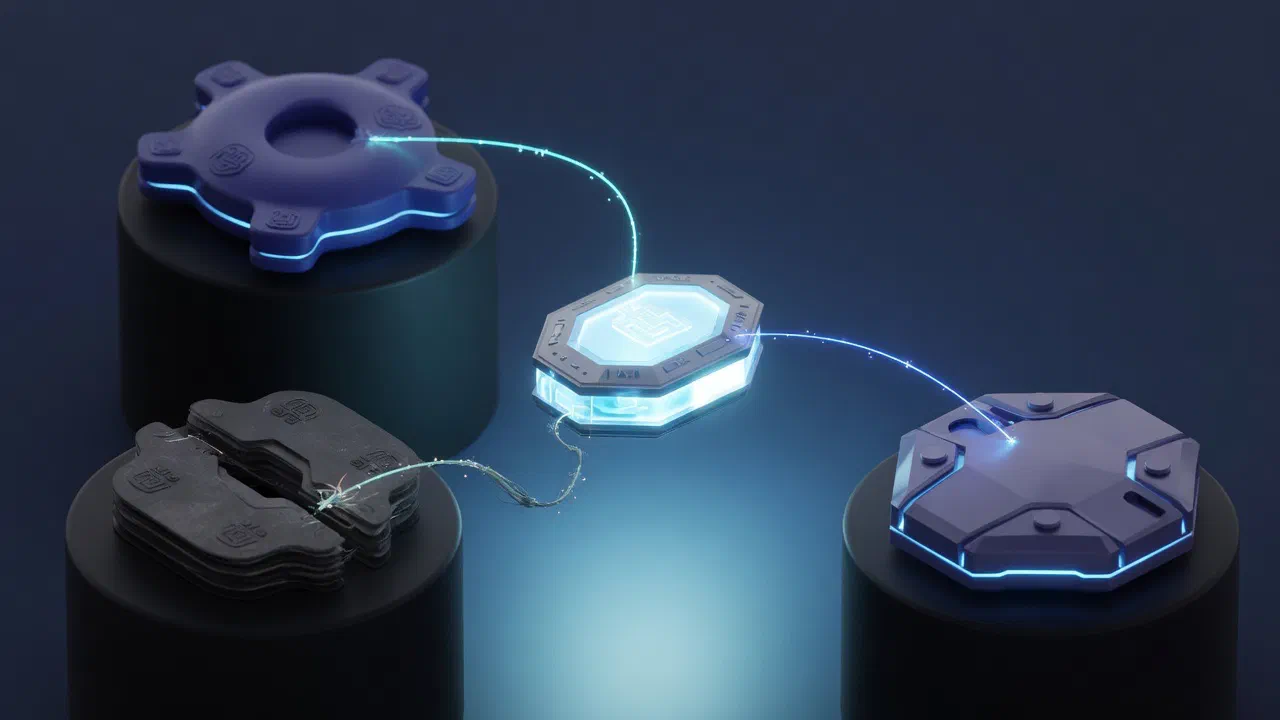
Against vendor risk, one decision does the real work: build the quorum from different manufacturers. A 2-of-3 assembled from three devices by the same company protects you well against theft, fire, and clumsiness, and barely at all against a key-generation bug in that company’s firmware, because the identical flaw sits underneath every key. Mix vendors and no single broken generator reaches quorum by itself.
Figure: Three keys from one manufacturer share one firmware flaw. Three keys from three manufacturers do not.
Be honest about the cost, because this tier is where people lose money through their own setup:
- Most multisig losses are self-inflicted. A lost key with no documented recovery. A wallet configuration file nobody backed up. An heir who has no idea what any of it means.
- You must back up the descriptor too. The output descriptor is the file describing how your keys combine into a wallet. Your seeds alone may not rebuild access without it.
- Complexity you do not maintain is not security. If you will not rehearse recovery, a well-run Tier 2 setup protects you better than a multisig you half understand.
How to vet a signing device before you trust it
Five checks before your next purchase:
- Is the firmware open source, with reproducible builds? Open code lets researchers examine it. Reproducible builds let them confirm the binary you install matches that code.
- Can you supply your own entropy? Dice support hedges directly against the failure that hit Coldcard users.
- Does it follow open standards? BIP-39 seeds, output descriptors, and PSBT signing let you recover funds in other software if the manufacturer disappears.
- Does it sign air-gapped? QR codes or an SD card beat a USB cable into a networked machine.
- How did the vendor behave the last time they broke something? Look for a published advisory with real technical detail, a shipped fix, and a clear statement of who is affected. A company with visible incident history and candid write-ups is a safer bet than one with a spotless-looking record and no disclosures at all. Buyers skip this check most often, and it predicts the most.
Rotate on triggers, rehearse on a calendar
Move funds to a fresh seed when something specific has happened:
- Your vendor discloses a flaw in key generation or firmware.
- You cannot establish which device and firmware built a seed.
- The backup was photographed, printed, typed into any device, or left your control.
- Someone else has seen the words, or a co-signer leaves the arrangement.
- You inherited or were handed a wallet you did not create yourself.
Rotating on a schedule for its own sake works against you. Every migration is a fresh opportunity to mistype an address, expose a seed to a camera or a networked computer, or pay fees for nothing. Tax treatment varies too: in many countries moving between your own wallets is not taxable while any conversion along the way is, so check local rules before building a habit around it. Treat rotation as a response to a cause.
Give the calendar to rehearsal instead. Twice a year, restore a backup onto a wiped or spare device and confirm the addresses match, which catches a bad backup while it is still fixable. Every quarter, check your vendor’s security page. Once a year, ask whether someone you trust could recover these funds if you could not help them.
Reacting when an advisory lands
Subscribe to your vendor’s security channel now, not during an incident. When something is announced:
- Confirm it applies to you: your model, your firmware version, and how that seed was generated. Here the Tier 1 record pays for itself.
- Install the fixed firmware, then confirm the version on the device screen.
- Generate a new seed. A firmware update never repairs a seed that was already created weakly. That old key stays guessable forever.
- Prove the new wallet before you trust it. Read a receiving address off the device itself rather than off your computer, send a token amount, and watch it land.
- Then move the balance, holding on to the previous backup until you are satisfied the replacement works.
A panicked bulk transfer at two in the morning is its own failure mode. Attackers count on the rush.
Takeaway
Exchange failure takes every customer’s funds on the same day and leaves you with a legal claim you cannot act on. Wallet-firmware failure reaches the people who had a specific, identifiable weakness, and you can build against it beforehand.
Start where you are. Verify your backup this week. Write down which device and firmware made each seed. Add a passphrase before your savings grow large. Reach for multisig when you are ready to rehearse it. Do that much, and the next advisory becomes a lookup instead of an emergency.