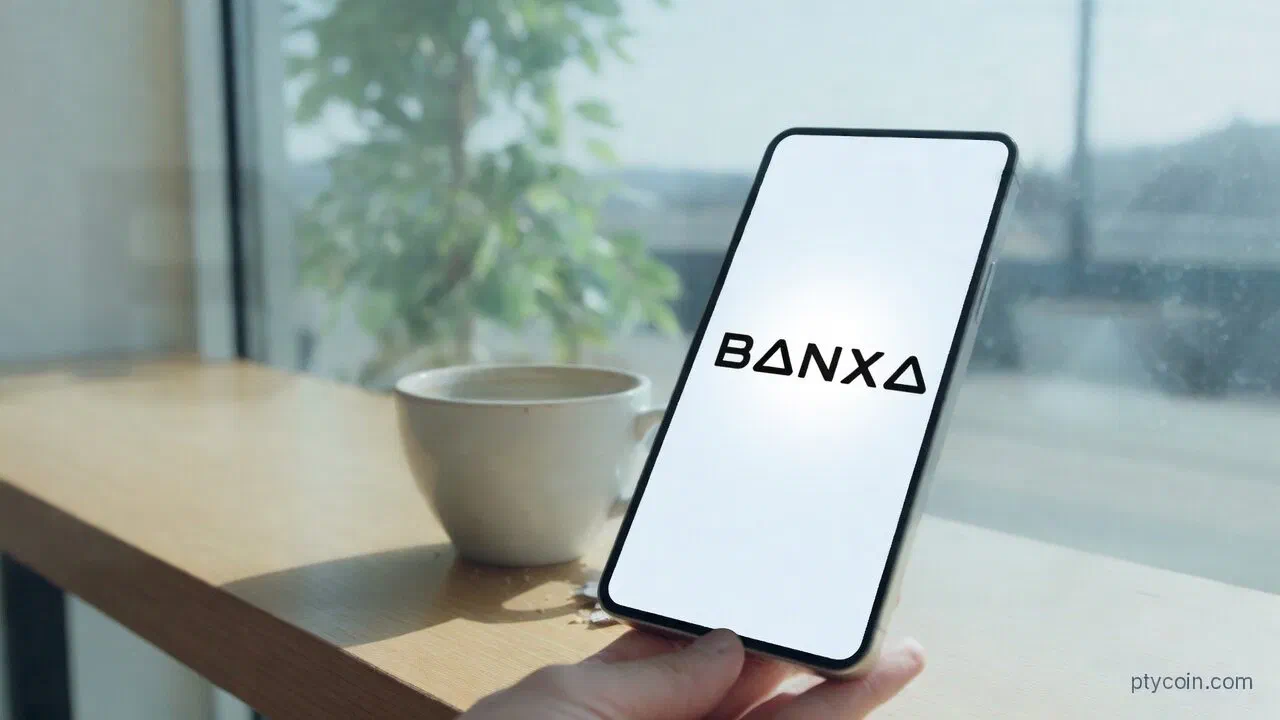
Banxa launched Banxa Native on 20 August 2026, a headless on-ramp and off-ramp stack that lets partner wallets, exchanges, and fintech apps run fiat-to-crypto and crypto-to-fiat inside their own screens instead of bouncing users out to a Banxa-branded checkout.
What shipped
In a press release republished 20 August and a same-day X post, Banxa framed Native as infrastructure that “disappears” into the partner product. Cards, Apple Pay, and Google Pay execute through Banxa SDKs as native payment sheets. Bank transfers such as ACH, SEPA, PayID, and Interac run fully through the Native API. Partners keep branding and the customer relationship; Banxa stays named as the regulated provider at the point of payment and handles quotes, compliance checks, and settlement underneath.
BeInCrypto’s 25 August feature walks the same product cut: a wallet can request a live price, confirm the user and method are eligible, then open an Apple Pay sheet without sending the customer to a Banxa webpage. Platforms that already KYC users can pass identity data so a returning customer may skip a second verification and move straight to payment.
Company figures in the launch materials put Banxa at more than 400 platform integrations (including MetaMask, Trust Wallet, Phantom, Ledger, Hyperliquid, BitMEX, and OKX), 10 million-plus users across 180-plus countries, and more than $10 billion in cumulative volume. Those are Banxa’s claims. Trust Wallet CEO Felix Fan is quoted saying Banxa helps embed compliant fiat-crypto access directly into the user journey.
OSL completed its acquisition of Banxa in January 2026, folding the ramp business into a wider stablecoin-payments push. Banxa’s Dutch entity also holds a MiCA licence covering 30 EEA countries, per prior company disclosures cited in the BeInCrypto piece.
The LatAm catch: Pix and SPEI still leave the app
Native does not make every local rail headless. Banxa’s own supported payment methods docs are clear: Pix, SPEI, VietQR, Khipu, PayPal, iDEAL, Klarna, and other “alternative” methods still complete on Banxa Hosted Checkout. Partners can keep identity, eligibility, quoting, and method selection on the Native API, then hand the user a Banxa-hosted surface only for that payment step. Trying to create those methods as a headless Native ramp fails; the API returns neither a redirect URL nor a QR payload for them.
That boundary matters in the markets this desk watches most. Brazil’s Pix and Mexico’s SPEI are the everyday cash-in and cash-out rails for stablecoin users. A wallet that integrates Native can keep card and Apple Pay buys inside its chrome, but a Pix deposit or SPEI payout still opens a Banxa-hosted step unless the partner builds around that hybrid path. Koywe’s LatAm on/off-ramp API and Interlace’s new Brazil office are chasing the same job from different angles: make the fiat↔stablecoin handoff feel like product, not a detour.
Why the checkout handoff still kills conversions
Buying $200 of USDC inside a self-custody wallet should feel like paying for anything else on your phone. In practice it often means a second logo, a second KYC form, and a page that looks less safe than the app you already trusted. The gap between stablecoin activity and stablecoin spending is the backdrop. McKinsey and Artemis put real payment volume at $390 billion for 2025, against roughly $35 trillion of annual on-chain stablecoin transaction volume — about 1%, and around 0.02% of global payments. The rest is trading, transfers, and other non-merchant flow. Checkout friction is one reason payments stay a thin slice of the pie.
Native’s bet is narrow and measurable: if the purchase stays inside the wallet UI and eligible users skip a repeat ID check, fewer people abandon at the moment money is about to move. Proof is conversion data partners have not published yet. The product answer is credible; the user-behavior answer is still open.
For readers who already hold keys, the useful distinction is who shows the buy button. A MetaMask or Trust flow powered by Native still settles through Banxa’s licensed rails. Your self-custody wallet receives the coins; the fiat side remains a regulated on-ramp with KYC, not a bankless magic window. That is fine for funding a wallet. It is not a substitute for keeping long-term holdings off exchange.
What to watch next
Three checkpoints will show whether Native is a real UX upgrade or just cleaner marketing copy:
- Partner ships. Named wallet or exchange launches that show card/Apple Pay buys with no Banxa chrome, plus a public before/after conversion claim.
- Local-method roadmap. Whether Pix, SPEI, and other LatAm rails move from hosted checkout into a true headless path, or stay hybrid by design.
- OSL corridor coverage. How Banxa’s licences and OSL’s Asia/LatAm footprint combine into concrete pay-in and pay-out markets with published fee cards.
Takeaway
On 20 August 2026 Banxa put Banxa Native live so partner apps can keep fiat↔crypto checkout on their own screens for cards, Apple Pay, Google Pay, and several bank-transfer rails. Pix, SPEI, and other local methods still drop into Banxa Hosted Checkout for the payment step, which is the part LatAm users feel most often.
If your wallet or exchange adds a Banxa buy button this quarter, ask which methods stay in-app and which still redirect. The product only wins if the handoff you use every week actually disappears. This is product reporting, not a recommendation to use any ramp or hold any token.