

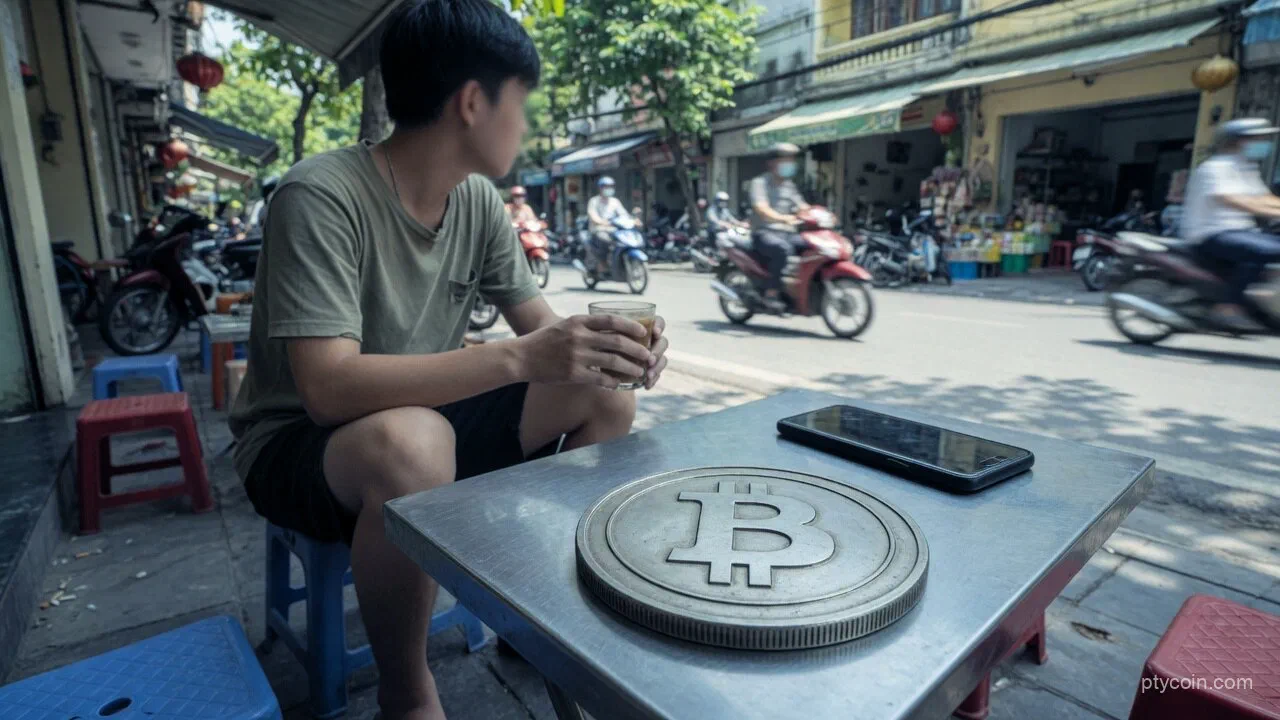
Vietnam’s Decree 284/2026/NĐ-CP took effect on 1 September 2026, putting the country’s first administrative penalty schedule for crypto-asset violations into force. Article 7 of the decree fines organisations VND 180 million to VND 200 million (about US$6,800 to US$7,600) for providing or advertising crypto services without a licence from the Ministry of Finance.
That is what changed today. The retail trading desk is the same as yesterday: Vietnam still has no licensed crypto exchange, so the six-month clock that would fine domestic investors for using unlicensed platforms has not started.
What the decree actually turns on
The government issued Decree 284 on 16 July 2026, signed by Deputy Prime Minister Nguyen Van Thang. It is the enforcement companion to Resolution 05/2025/NQ-CP of 9 September 2025, the five-year pilot that created a licensed crypto-asset market under the Ministry of Finance. Vietnam Law Magazine, reprinting VNA, called it the first time Vietnam has written administrative fines for crypto-market conduct into a decree.
Two clauses do the work that matters for users.
Platforms, live today. Article 7, clause 4, sets VND 180 million to VND 200 million for offering crypto-related services, or advertising them, without the licence to organise a crypto-asset trading market. The same article lets authorities order the removal of websites, software, and trading systems used in the violation, and the confiscation of the means used to commit it. The maximum fine anywhere in the decree is VND 200 million for organisations and VND 100 million for individuals. Listed Chapter II amounts apply to organisations; an individual who commits the same act pays half.
Investors, not yet. Article 9 sets VND 30 million to VND 50 million (about US$1,140 to US$1,900) for a domestic investor who trades crypto-assets other than through a Ministry of Finance-licensed service provider, “in accordance with Clause 2, Article 7” of Resolution 05. That clause is the delay switch. Resolution 05, Article 7.2 says the licensed-platform requirement, and the sanctions that follow, apply six months after the first crypto-asset service provider is licensed. Baker McKenzie’s September 2025 alert reads the same text the same way.
No first licence means no six-month clock. No clock means the investor fine in Article 9 is on the books and not yet in play.
Five names, zero licences
VietNamNet reported in August that a March 2026 Ministry of Finance consultation with the Ministry of Public Security and the State Bank of Vietnam treated five applications as valid: VIX Crypto Asset Exchange, Loc Phat Vietnam Crypto Asset Exchange, Vietnam Prosperity Crypto Asset Exchange (CAEX), Techcom Crypto Asset Exchange (TCEX), and Vietnam Digital Assets.
Passing a dossier check is not a licence. To Tran Hoa, standing deputy head of the Digital Asset Trading Market Board at the State Securities Commission, said at the Vietnam RWA Summit that five firms had cleared an initial assessment and still needed Level 4 information-system security certification plus VND 10 trillion (about US$383 million) in contributed charter capital, according to an Aug. 30 report by crypto.news citing VNA and a 1 September write-up by Bitcoin.com. Resolution 05 also caps foreign ownership at 49 percent and, in the first phase, the government has said it plans to license no more than five exchanges.
The people who actually trade in Vietnam do it somewhere else. VietNamNet named Binance as the most-used offshore venue, then OKX, BingX, Bitget, Gate, and MEXC. Binance has been hiring a remote Vietnam general manager and pulling staff out of local community groups since March. OKX took a strategic stake in CAEX alongside VPBankS, LynkiD, and HashKey Capital, aiming at that VND 10 trillion capital bar. Neither move is a licence.
Coins on an unlicensed book are not yours
Self-custody is the practical answer while the clock is idle. Coins sitting on Binance or OKX are the exchange’s coins. If those platforms geo-block Vietnamese users, or if Hanoi orders sites and apps taken down under Article 7, a withdrawal window can close faster than a support ticket opens. Moving the stack to a wallet you control, on-chain, is the one step that does not depend on a licence Hanoi has not issued.
That is the same pattern Brazil is walking toward from the other direction. The Banco Central do Brasil’s VASP authorisation regime is already in force, with a 30 October 2026 filing deadline for firms that were already serving Brazilians. Different statute, same squeeze: the offshore book that felt like the market becomes the unlicensed one.
A hardware wallet or a well-rehearsed software wallet does not make you a Vietnam-licensed venue, and it does not make offshore trading legal once the six-month clock runs. It does mean that if the app you used last month disappears, the coins are still in an address you can open.
What to watch
Three dates will tell you when today’s gap closes:
- The first licence. The Ministry of Finance names a provider. That is the day the six-month investor-fine clock starts, per Resolution 05, Article 7.2.
- Geo-blocks and takedowns. Whether Binance, OKX, and the rest restrict Vietnamese IPs, or whether Article 7 removal orders show up against local mirrors and ads, before any licence exists.
- The six-month mark after licence one. That is when Article 9’s VND 30–50 million investor fine is designed to become real for anyone still trading off the licensed books.
Until the first of those happens, Decree 284 is a live penalty schedule aimed at operators and advertisers, sitting on top of a market that still has nowhere licensed to send a Vietnamese retail order. This is reporting on a rule that took effect today, not advice to trade, hold, or use any platform.