Félix Pago said on 1 September 2026 that it raised $200 million in new financing for its WhatsApp remittance service: $87 million of Series C equity led by a16z crypto, plus a $113 million credit facility from General Catalyst’s Customer Value Fund.
a16z crypto published its investment note the same day. Unchained and Crunchbase News matched the split and the investor list from a company statement: QED Investors, Castle Island Ventures, Switch Ventures, Contour Venture Partners, and Endeavor Catalyst joined the equity round.
What the product actually does
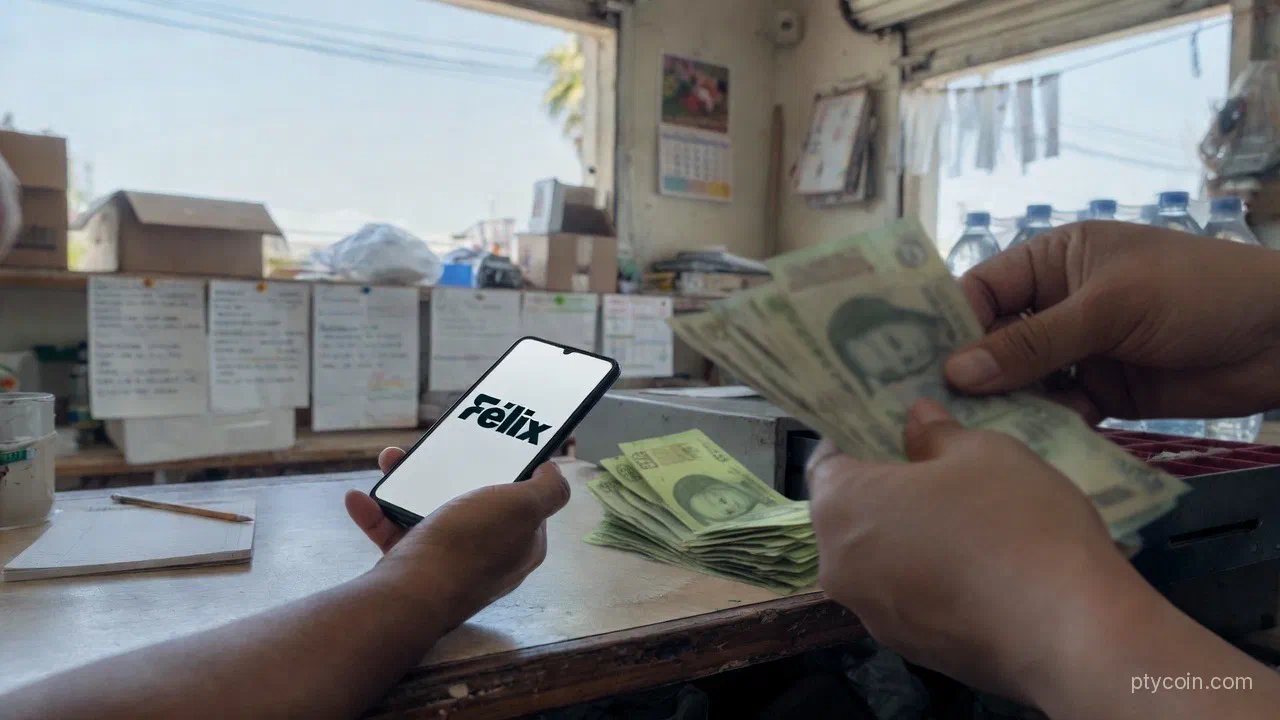
Félix is a chat-first remittance app for Latinos in the United States sending money to family across Latin America. Users talk to an AI agent inside WhatsApp. The agent handles onboarding, the transfer, and support. There is no separate consumer crypto wallet for the typical sender.
Behind that chat window, a16z’s Ali Yahya and Noah Levine write that Félix settles most transactions in USDC, then payout partners convert to local currency. “Customers do not need to interact with crypto directly,” they wrote. Unchained’s company-supplied partner list includes Walmart, UniTeller, Intermex, Visa, Stripe, Mastercard, and Checkout.com. The firm runs no physical branch network of its own.
That design is the news peg for a crypto desk: dollar stablecoin rails move the value; the customer experience is a message thread. The same pattern shows up when incumbents add token settlement (MoneyGram Ramps on Solana, Western Union’s Stablecard path) and when regional exchanges sell invisible stablecoin corridors (Bitso and Mercado Bitcoin’s Brazil pairing).
The scale figures, and who is behind them
Company figures, repeated by a16z, Unchained, and Crunchbase: Félix has processed more than $8 billion in transactions for over six million people since founding in 2020, operates in eleven Latin American markets (including Mexico, Colombia, Brazil, and Peru), and grew revenue more than 2.5× over the past year. Most new users arrive by word of mouth, per a16z. Treat those as company claims until an audited volume print lands.
Crunchbase puts total capital raised near $300 million after this round, and says the undisclosed valuation “increased threefold” since a $75 million Series B led by QED in 2025. Co-founders Manuel Godoy (CEO; Venezuelan, Caltech-trained engineer) and Bernardo García (Mexican; Uber and McKinsey background) met as Wharton MBAs. The company is Miami-based.
a16z frames the market with a remittance print of about $161 billion to Latin America and the Caribbean in 2024, roughly 80% from the United States, and argues U.S.-to-Mexico remains expensive even as one of the world’s cheapest major corridors. The firm also cites U.S. Latino economic output near $4 trillion a year as the wider addressable base once remittances become an acquisition channel for other products.
Where the $200 million is supposed to go
The raise is not only more remittance capacity. Félix says it will expand remittances and mobile top-ups, spend on AI and financial infrastructure for what it calls a Cognitive Financial Companion, and develop lending and savings through third parties. Godoy’s line in the company statement, carried by Unchained and Crunchbase: “Traditional financial institutions often start with the product they want you to use. We want to start with the person.”
The $113 million General Catalyst facility is credit, not equity. FinanceFeeds’ read is that the line funds operating scale and new products rather than another ownership tranche. That matters for how you parse “raised $200 million”: $87 million is venture equity; $113 million is borrowable capacity if and when the company draws it.
Nothing in the public materials published a live fee card for every corridor, a guarantee that every transfer settles in USDC, or a launch date for lending and savings. The companion itself is described as something the company will do “when launched,” per Unchained’s reading of the statement. Remittances are live; the broader platform is the pitch the new capital is meant to finance.
What this means if you send or receive the money
If you already send home through a cash agent, Félix is selling speed and a chat interface, with USDC as invisible plumbing. Recipients still get local currency through payout partners, so the last mile looks like a familiar cash pickup or bank deposit, not a self-custody wallet. If your goal is to hold dollars on-chain in Mexico, that is a different path: receive USDT/USDC and push pesos over SPEI when you want the token in a wallet you control.
Self-custody still sits outside this product. A WhatsApp remittance that settles in USDC on Félix’s rails is a custodial payment service. The stablecoin move is between companies and partners. Your family receives pesos or local cash, not a seed phrase. That is fine for many senders; it is not the same as withdrawing USDC to a wallet you hold.
Compare quotes the old way before you switch: all-in fee, FX spread, delivery time, and what happens if a transfer fails. Company marketing will pick the corridors where it looks best. Your corridor may not match the headline number.
Takeaway
On 1 September 2026, Félix packed a remittance story crypto desks can actually verify: $87 million of a16z-led equity, $113 million of General Catalyst credit, USDC settlement most customers never see, and a stated plan to turn WhatsApp remittances into lending and savings. The volume and user counts are the company’s. The product that exists today is chat-to-cash across eleven LatAm markets.
For readers who move money US-to-LatAm, the useful check is practical. Compare Félix’s all-in cost on your corridor against the agent you already use, remember the recipient side is still local currency through partners, and keep self-custody for any dollars you intend to hold yourself. This is funding news about a payments company, not a recommendation to send your next transfer through Félix or to buy USDC for the trip.