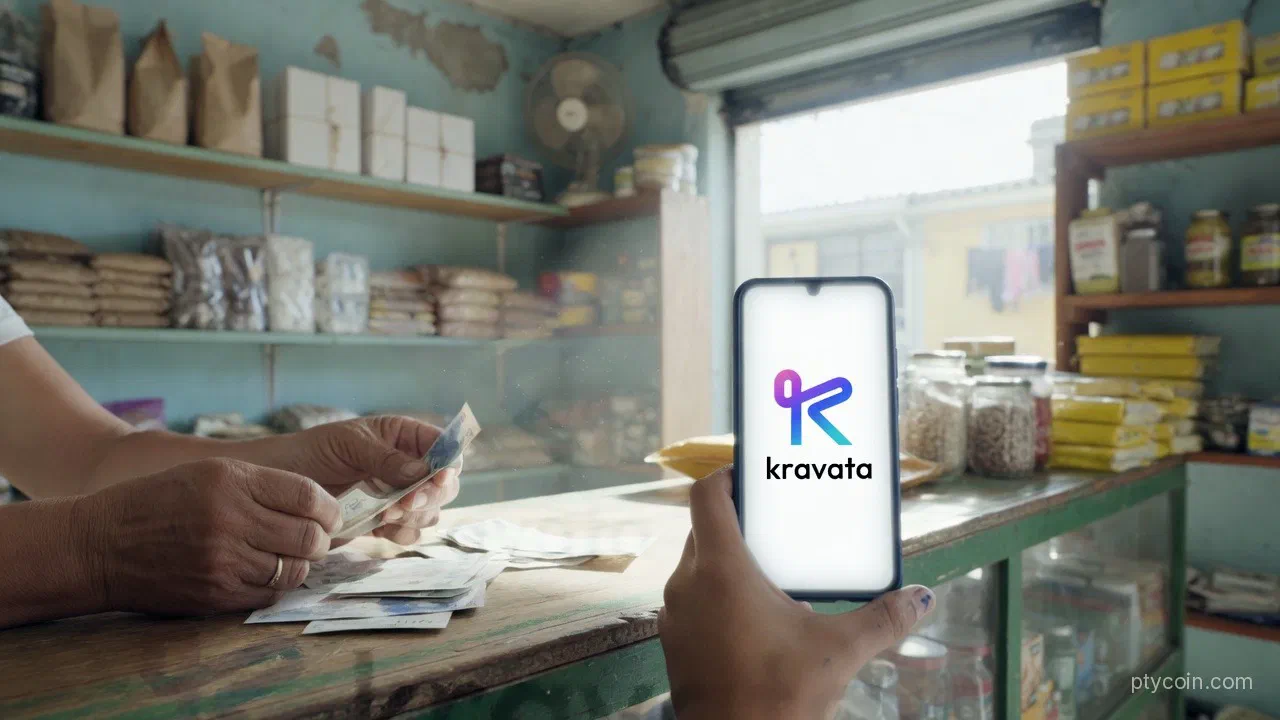
Kravata, the Bogotá stablecoin payments fintech, said on 2 September 2026 that its regulated rails for Latin America are now live on the Sui blockchain: stablecoin transfers, payouts, merchant settlement, and embeddable global accounts, with zero gas fees and settlement in seconds for a base the company puts at about five million users.
Sui Network posted the go-live the same day. Phemex News and CoinGabbar matched the product list and the five-million figure from the company and foundation posts. Treat the user count as Kravata’s claim until an audited print lands.
What Kravata already sells
Kravata is infrastructure, not a consumer meme app. Per its FAQ, it operates today in Colombia, Mexico, and the United States, and wires local currency to dollar stablecoins, mainly USDC and USDT against COP, MXN, and USD. Businesses plug in through APIs, a white-label widget, or a web app. End users get Kravata Go for digital-dollar balances, remittances, and local cash-out.
The company says it has processed more than US$350 million across more than 80 clients, and lists backers including Framework Ventures, Circle Ventures, Volt Capital, Magma Partners, and Simma Capital. Those are FAQ figures, not a third-party audit.
The named client that matters for Colombian readers is Claro. On kravata.co, Claro’s testimonial says the alliance puts digital-dollar savings and cross-border payments inside the Mi Claro app. That is the pattern LatAm readers keep meeting: a familiar super-app surface, stablecoins as the settlement layer underneath.
What “live on Sui” changes
Before this week, Kravata already moved COP and MXN into USDC/USDT for businesses and Go users. The Sui cut is the settlement layer those flows can run on. The public pitch from Sui Network and the secondary write-ups is specific: gasless stablecoin transfers, payouts and collections, merchant settlement, and accounts you can embed in another product, settling in seconds.
“Zero gas” is a user-facing claim. On Sui it usually means the end user does not need to hold SUI to move a supported stablecoin, because the protocol or a sponsor covers the fee. It does not automatically mean Kravata’s FX spread, KYC gates, or cash-out fees are free. Ask for the all-in cost on your corridor before you treat the headline as a fee card.
Nothing in the public materials published a live fee schedule, a named list of which stablecoins are gasless on Kravata’s Sui path, or a date when every Claro Mi Claro flow moves onto Sui. The announcement is that the regulated stack is available on the network. Volume migration is a company execution story after that.
Where this sits in LatAm payment rails
Stablecoin payments are the desk’s busiest LatAm beat this week. Félix Pago’s $200 million raise is chat-first US–LatAm remittances with USDC mostly invisible to the sender. Bitso and Mercado Bitcoin are pairing a Brazilian retail shelf with Bitso’s cross-border rails into Mexico and beyond. Kravata is the Colombia-rooted infrastructure cut of the same theme: B2B APIs, telco distribution, and now a Layer-1 settlement pitch aimed at cost and speed.
For a business already wiring payroll or supplier payouts through Kravata, a cheaper settlement layer is operational news. For a person holding dollars against COP or MXN devaluation inside Kravata Go, the chain underneath matters less than whether you can withdraw to a bank or to a wallet you control. Kravata’s own materials describe institutional custody partners for client funds. That is a regulated custodial product. It is not self-custody.
If your goal is to hold USDC in keys you control, this launch does not replace withdrawing to your own wallet after a local on-ramp. If your goal is to pay a supplier in Mexico from Colombia in minutes, an embeddable account on gasless rails is the product being sold — once the corridor, asset, and all-in cost are in writing.
Takeaway
On 2 September 2026, Kravata put its LatAm stablecoin stack on Sui and sold the combination as zero-gas transfers, second-scale settlement, and embeddable accounts for a five-million-user base the company claims. The Claro distribution and the COP/MXN ramps are the regional substance. The Sui move is the settlement bet.
For readers in Colombia or Mexico, the practical check is narrow. Confirm which of your flows actually settle on Sui, what you pay all-in after the gas line goes to zero, and whether you still need a self-custody wallet for dollars you intend to keep. This is product-launch reporting about a payments fintech, not a recommendation to move balances onto Kravata or to buy SUI because a partner went live.