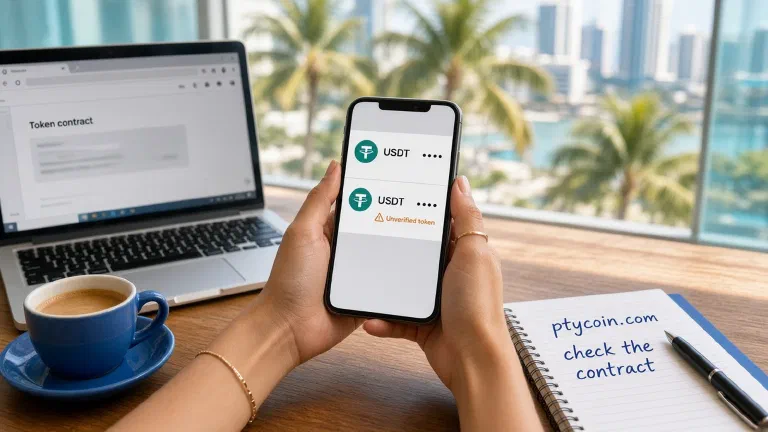


On 21 August 2026, the comment window closed on the joint notice of proposed rulemaking published at 91 Fed. Reg. 37234 (document 2026-12460, 22 June 2026). That NPRM would make every permitted payment stablecoin issuer (PPSI) keep a customer identification program (CIP) under the Bank Secrecy Act. The American Bankers Association letter filed the same day says a holder who buys or redeems a payment stablecoin directly with its issuer must open an issuer account and clear CIP before the dollars move. The Blockchain Association’s parallel comment accepts CIP for ongoing primary-market customers and asks the agencies to keep one-off redemptions, and redemptions routed through another regulated intermediary, outside that account gate. Neither letter is a final rule.
What 91 Fed. Reg. 37234 actually proposes
FinCEN, the OCC, the Federal Reserve Board, the FDIC, and the NCUA jointly proposed the CIP package to implement the GENIUS Act (Pub. L. 119-27) directives that treat PPSIs as BSA financial institutions and require them to verify account holders. The Federal Register abstract and govinfo PDF frame it as a PPSI-specific CIP, not a rewrite of exchange MSB rules.
The load-bearing definitions sit in proposed 31 C.F.R. § 1033.100. An account is a formal relationship between a PPSI and a customer established to provide ongoing services, dealings, or other financial transactions. An illustrative list of those transactions includes issuing or redeeming a payment stablecoin. A customer is generally a person who opens a new account. The preamble at 91 Fed. Reg. 37239 then flags the edge case the comment fight is about: a person with no prior issuer relationship who bought the token on an exchange (or elsewhere) and later walks up to the PPSI to redeem it. FinCEN expressly asks whether the CIP proposal should be refined for that activity. That question is still open in the proposal text itself.
The NPRM also proposes that the final rule take effect 12 months after the final rule is issued, giving PPSIs a year to build the program once the agencies lock language. GENIUS’s broader statutory clock still points at the earlier of 18 January 2027 or 120 days after primary federal payment-stablecoin regulators finish their implementing package, as we mapped in the one-year rulemaking checkpoint. CIP is one piece of that stack, not the whole statute.
What the ABA wants changed
ABA SVP and Counsel (Illicit Finance) Heather Trew’s 21 August letter supports a bank-like CIP for PPSIs and then asks for three fixes before finalization.
First, drop the “formal relationship” gate for primary-market cash-in and cash-out. The association argues that the 2003 bank CIP carve-out for occasional transactions (check cashing, wire transfers, money orders) does not map onto a PPSI’s GENIUS-authorized activities of issuing, redeeming, and managing reserves. Its concrete rewrite: purchasing or redeeming a payment stablecoin directly from the issuing PPSI should first require opening an account with that PPSI and should trigger CIP. Under that reading, a self-custody holder who never dealt with the issuer before cannot complete a one-off direct redemption as an unidentified non-customer.
Second, close secondary-market gaps. ABA wants exchanges and other virtual-asset service providers held to equivalent customer-identification and examination standards, noting that many digital-asset platforms are MSBs under FinCEN rules and that MSBs are not currently required to run a formal CIP of the bank type (see 31 C.F.R. Part 1022 versus the bank CIP at 31 C.F.R. § 1020.220). Without that, a holder who refuses issuer onboarding could route through a third party that keeps a formal relationship with the PPSI while the end user stays opaque.
Third, keep CIP data fields uniform. The NPRM would make PPSIs collect a date of formation for legal-entity customers. ABA says that field is new relative to existing CIP rules, unexplained in the preamble, and risks breaking a PPSI’s ability to rely on CIP already performed by another financial institution, including a parent bank that owns a GENIUS-authorized subsidiary issuer.
What the Blockchain Association would keep open
The Blockchain Association comment, also dated 21 August 2026, supports applying a familiar BSA-style CIP to PPSIs and strongly supports limiting that CIP to primary-market relationships in which the PPSI deals directly with the customer. Where ABA wants the redemption edge case closed into mandatory account opening, BA asks the agencies to clarify that “account” does not include:
- a PPSI satisfying a holder’s one-off redemption request;
- ordinary vendor, data-processing, and commercial partnership arrangements;
- non-stablecoin activities already covered by other BSA rules; and
- redemptions processed through another regulated financial institution, so the intermediary, not the intermediary’s downstream users, is the PPSI’s customer.
BA’s one-off argument leans on the same banking history ABA cites, from the opposite direction: occasional bank transactions were left outside formal CIP accounts, and a discretionary one-off redemption resembles that pattern more than an ongoing deposit relationship. BA also notes that even a one-off cash-out would still sit under other KYC, screening, and suspicious-activity duties; the fight is specifically about whether that contact creates a CIP account.
CryptoSlate’s 26 August read of the same letters matches that split and adds a market-practice note: major U.S. issuer redemption channels for eligible customers are already account-based and identity-checked today. A final rule that adopts ABA’s primary-market rewrite would harden that practice into the federal floor whenever a PPSI offers direct redemption. A final rule that adopts BA’s carve-outs would leave room for a narrower one-off or intermediary-routed path, still subject to other BSA controls.
Who feels the edge case
Self-custody holders who want dollars from the issuer. If you acquired USDT, USDC, or another payment stablecoin on an exchange, over the counter, or peer-to-peer, and later try to redeem directly with a GENIUS-permitted issuer, ABA’s position turns that cash-out into an onboarding event: open the account, complete CIP, then receive dollars. BA’s position would let agencies keep optional one-off redemptions from creating that account relationship. Until a final rule picks a side, issuer terms of service still decide what any given PPSI will do for a non-customer.
Exchanges and other intermediaries. ABA wants bank-equivalent CIP and examination on secondary-market actors so the identity trail does not stop at a straw redeemer. BA wants redemptions presented by another regulated financial institution to treat that institution as the PPSI customer. Either outcome reshapes who collects the file when LatAm payment desks and remittance ramps touch a U.S.-permitted issuer.
LatAm users of dollar stablecoins. GENIUS does not rewrite Pix, SPEI, Bre-B, or local VASP registries. It does condition how U.S.-facing permitted issuers must identify the people they deal with directly, and dollar tokens already dominate many LatAm payment and savings flows. Argentina’s CNV PSAV track and Brazil’s BCB SPSAV stack (Resolução BCB nº 520, filing deadline 30 October 2026) remain separate local regimes. The practical import of 91 Fed. Reg. 37234 for a reader in Panama City, São Paulo, or Buenos Aires is the cash-out path on any dollar stablecoin whose issuer sits inside the GENIUS PPSI box: secondary-market acquisition can stay exchange- or P2P-native, while direct issuer redemption is the contact the ABA wants fully CIP-gated.
Builders and counsel. Map product flows against the proposed § 1033.100 account/customer definitions and against both comment letters. Do not treat either advocacy position as operative law. Watch whether the final rule keeps “formal relationship,” adopts ABA’s mandatory pre-redemption account opening, or writes BA’s one-off and intermediary exclusions into the regulatory text.
Takeaway
91 Fed. Reg. 37234 (FinCEN document 2026-12460, published 22 June 2026) is still a proposal. Comments closed 21 August 2026. The ABA letter that day would make every direct PPSI purchase or redemption open an issuer account and run CIP first. The Blockchain Association letter the same day would keep one-off redemptions and intermediary-routed cash-outs outside that account definition. The agencies have not chosen. Until they publish a final CIP rule, issuer terms and existing BSA duties govern any cash-out you attempt, and a draft Federal Register page is not a live shield or a live obligation. This is a reading of the NPRM and the filed comments, not legal, tax, or investment advice — verify the Federal Register page, the ABA PDF, and the BA PDF before you change a redemption flow or a compliance calendar.