
Bybit said on 8 September 2026 that Bybit Pay is now connected to Bre-B, Colombia’s interoperable instant payment network, so users can scan a supported merchant QR code and pay from a crypto balance in the Bybit app.
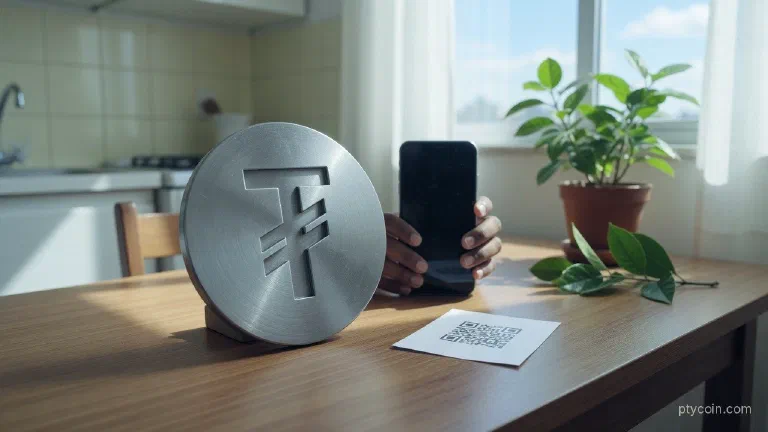
The company pitches the cut as everyday spend without a local bank account, cash, or a separate currency exchange step: open Bybit Pay, scan, pick a supported crypto, confirm.
What Bybit actually announced
The 8 September note is a product announcement, not a regulator filing. Bybit says Bre-B links banks, digital wallets, and other financial institutions on one network, and that Bre-B QR codes are how participating merchants take those payments. Bybit Pay’s job, in that framing, is to turn an in-app crypto balance into a scan at the counter.
The published flow is six taps: open the Bybit app, go to Bybit Pay, tap Scan, point at a supported Bre-B merchant QR, enter or confirm the amount, choose a supported crypto, confirm. Eligible merchant payments can earn 2–10% cashback, and new users can claim a COP 10,000 coupon toward a first eligible Colombia payment via Bybit’s Colombia coupons page. Treat both figures as Bybit’s promo terms; they are not a published all-in fee schedule.
An earlier 28 August note already marketed Bre-B QR availability inside Bybit Pay with cashback and a first-payment coupon. The 8 September post is the fuller “connected to Bre-B” write-up with the how-to and the traveler pitch. Report it as Bybit deepening the Colombia QR rail, not as inventing QR spend from scratch that week.
Bre-B is the rail Colombians already use
Bre-B is Colombia’s public-policy instant payment system, guided by Banco de la República. It went live on 6 October 2025. A March 2026 BanRep blog says the design started in 2022, builds on existing private instant rails, and routes them through centralized directory and settlement components the central bank operates.
By the end of January 2026, BanRep counted 218 participating entities and five fully interoperating private systems, with more than 370 million transactions settled through the operational settlement mechanism totaling more than 59 trillion pesos in under four months. Alias registration in the centralized directory sat near 99 million aliases for more than 33 million customers and 2.8 million merchants. Those are BanRep’s figures, not Bybit’s.
That scale is why a crypto spend app naming Bre-B matters more than another generic “pay with crypto” slogan. In Colombia, the checkout people already trust is often a QR on a counter. Plugging a crypto balance into that QR is the same pattern Brazil saw with Pix and Mexico with SPEI-linked wallets: the national rail is the distribution; the dollar-linked or crypto balance is the funding layer.
The competitive week around the same QR
Bybit was not alone on 8 September. RedotPay said the same day that Instant QR scan-to-pay was live for merchants in Brazil, Colombia, and Peru, settling from stablecoin balances in its app. RedotPay’s posts name the countries; they do not print a verified rail list the way Bybit names Bre-B. KuCoin Pay also ran a September Scan & Pay fest covering Brazil, Argentina, and Peru.
The news pattern is consistent: several named apps are racing to put crypto or stablecoin balances behind the QR codes locals already scan. Bybit’s Colombia cut is the one that puts the national rail’s name in the headline.
What the announcement still does not say
A launch post is not a fee card. Bybit has not, in the materials cited here, published the all-in spread on a COP ticket after cashback, daily limits, which coins settle each merchant path, or whether every Bre-B QR works or only a supported subset. “Supported Bre-B merchant QR” is the company’s own qualifier; verify on your phone before you treat a café sticker as guaranteed.
The product is also custodial. Balances sit in Bybit’s stack until you spend or withdraw. That is normal for an exchange payments feature; it is not self-custody. Bybit’s Colombia QR terms, published separately, describe Bybit as a technological interface to a local provider for interoperable QR payments, not as a Colombian bank. If your goal is keys you control, scan-to-pay does not replace withdrawing to a wallet you open yourself. If your goal is buying lunch in Bogotá or Medellín from a crypto balance without a separate P2P cash-out first, that is the product being sold.
Availability is account- and jurisdiction-gated. A marketing map is not a licence for every reader.
Takeaway
On 8 September 2026, Bybit put a named national rail in a crypto spend announcement: Bybit Pay connected to Colombia’s Bre-B QR for merchant payments from an in-app crypto balance, with cashback and a first-payment coupon as the promo layer. BanRep’s own numbers show why the rail is the story; hundreds of millions of instant payments already clear there. For travelers and freelancers already holding crypto on Bybit, the practical test is whether a real merchant QR settles at a rate you accept. For everyone else watching LatAm payment rails, it is another data point that the spend fight is moving to the QR on the counter.
This is reporting on a product launch, not a recommendation to fund, spend, or keep balances on any custodial app.