
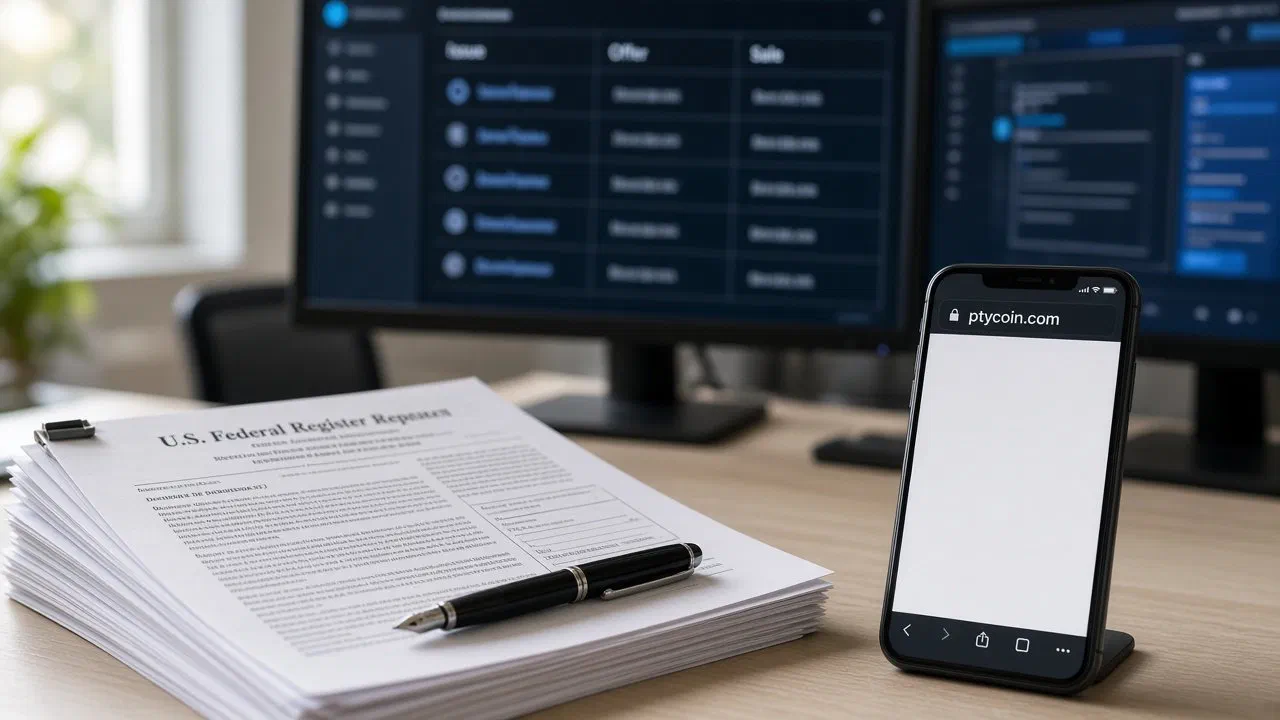
On 18 August 2026, the U.S. Department of the Treasury published a notice of proposed rulemaking (NPRM) at 91 Fed. Reg. 53368 (document 2026-16796). An NPRM is a draft regulation open for public comment. This one would carry out section 3 of the Guiding and Establishing National Innovation for U.S. Stablecoins Act (GENIUS Act) (Pub. L. 119-27, 12 U.S.C. 5902): who may create a payment stablecoin in the United States, and which platforms may offer or sell one to a person located there. Comments must arrive on or before 19 October 2026. The govinfo PDF is the 24-page proposed text of a new Part 1523 in title 12 of the Code of Federal Regulations (C.F.R.).
This filing sits next to a separate joint proposal from the Financial Crimes Enforcement Network (FinCEN) and the federal banking agencies: the customer-identification NPRM for permitted payment stablecoin issuers (PPSIs) at 91 Fed. Reg. 37234. That other file is about identity checks when someone deals directly with an issuer. This one is about issuance, offer, and sale.
What GENIUS section 3 already says
A payment stablecoin, under section 2(22) of the Act (12 U.S.C. 5901(22)), is a digital asset designed for payment or settlement. Its issuer must convert, redeem, or repurchase it for a fixed amount of monetary value.
Section 3(a) makes it unlawful for anyone other than a permitted payment stablecoin issuer to issue a payment stablecoin in the United States. A permitted issuer is a U.S.-formed person that is one of three things: an approved subsidiary of an insured bank or similar depository institution under section 5; a Federal qualified payment stablecoin issuer; or a State qualified payment stablecoin issuer. In plain terms, a bank subsidiary or a nonbank that has the federal or qualifying-state license the Act requires. Knowing participation in a 3(a) violation carries a fine of not more than $1 million per violation, imprisonment of not more than five years, or both (section 3(f), 12 U.S.C. 5902(f)).
Section 3(b) splits the platform rules across two dates. A digital asset service provider (DASP) is the statute’s term for the platforms these offer-and-sale limits target. Beginning 18 July 2028, a DASP may not offer or sell a payment stablecoin to a person in the United States unless a permitted issuer issued it (section 3(b)(1)). On the Act’s effective date, expected 18 January 2027 (eighteen months after enactment, per section 20), a DASP may not offer, sell, or otherwise make available in the United States a payment stablecoin from a foreign payment stablecoin issuer. That path is open only if the issuer has the technological capability to comply, and will comply, with lawful orders and reciprocal arrangements under section 18 (12 U.S.C. 5916) (section 3(b)(2)). Section 3(e) gives those limits extraterritorial effect when the conduct involves a person located in the United States. A platform outside the United States can still be in scope if it is dealing with someone who is located here.
Section 3(h) already exempts three activities: a direct peer-to-peer transfer between two individuals with no intermediary; an individual’s receipt between a U.S. account and a foreign account at the same parent company; and a software or hardware wallet that facilitates the individual’s own custody. Section 18(a) lifts section 3’s prohibitions for a foreign issuer that is supervised under a regime Treasury finds comparable under section 18(b) and registered with the Office of the Comptroller of the Currency (OCC). Section 3(c) lets Treasury write limited de minimis (very small volume) or emergency safe harbors. We mapped that calendar in the one-year GENIUS rulemaking checkpoint.
What proposed Part 1523 would do
Proposed § 1523.1 sets scope and definitions. Treasury reads every person that, for compensation or profit, engages in the U.S. business of issuing payment stablecoins as a DASP. “Issue” is the first transfer by the issuer, directly or indirectly (including by crediting an account), that results or will result in someone else having the right to use, transfer, convert, redeem, or repurchase the token. A coin sitting in the issuer’s treasury has not been issued. After a redemption, the next qualifying transfer is a new issuance. “Offer” tracks the statute and includes making available a payment stablecoin not yet issued (presales).
The definition that does the most work is “located in the United States.” For an individual, that means physically present in the United States, unless the person is not a U.S. resident and the presence is merely temporary. A U.S. resident traveling abroad still counts; a brief tourist visit may not. For an entity, it means organized or incorporated under U.S. or State law, or having a principal place of business in the United States. Treasury asked whether that test is too narrow or too broad. Comments can still move it.
Proposed § 1523.2 implements the issuance ban. Foreign issuers that meet section 18(a), including OCC registration, may issue in the United States in addition to permitted issuers. Issuance is “in the United States” only if, at that moment, the issuer is located there or issues to a person located there. Proposed § 1523.2(c) describes when an offshore person is deemed not to have issued there, even after an inadvertent U.S. mint: reasonable belief each recipient is offshore, implemented policies reasonably designed to avoid U.S.-located recipients, and no advertising or solicitation that targets them. Proposed § 1523.2(d) gives non-exclusive examples of participation in an unlawful issuance for the section 3(f) penalty. Those examples include taking on a redemption obligation (including as guarantor); coordinating key steps such as soliciting customers or minting (Treasury flags white-label branding); and acting as a market maker, distributor, or initial listing venue for newly issued tokens. Later secondary-market trading is aimed at the offer-sale rules instead.
Proposed § 1523.3 is the DASP timetable. The July 2028 listing screen lets through a permitted issuer or a section 18(a) foreign issuer. The January 2027 screen is the foreign issuer that can and will comply with lawful orders and section 18 reciprocal arrangements. Proposed § 1523.3(c) lets a DASP rely on the foreign issuer’s representation after reasonable due diligence, including confirming that no section 8 (12 U.S.C. 5907) secondary-trading prohibition is in effect, unless the DASP knows, has reason to know, or should know the representation is false. Proposed § 1523.3(d) treats as an offer or sale: direct U.S. solicitation; advertising the coin as available for U.S. purchase; answering an unsolicited U.S. inquiry with a willingness to sell; advising how to evade location detection (Treasury names IP-address checkers); and contracting with a U.S.-located person, whatever the consideration or delivery timing. Proposed § 1523.3(e) is the matching offshore version for platforms.
Proposed § 1523.4 restates the section 5(f) pending-application waiver, the section 3(c)(2) emergency safe harbor, and the three section 3(h) custody and peer-to-peer exemptions. The pending-application waiver applies only if a primary federal regulator grants a waiver that covers section 3. Treasury expects the emergency harbor as an order. Question 73 asks whether Treasury should write de minimis harbors under section 3(c)(1) now; the proposed text does not adopt one. Proposed § 1523.5 is severability: if a court strikes one piece, the rest can stand.
Who this would reach before 2027 and 2028
Foreign issuers that still mint into U.S. wallets. Without a permitted-issuer license, or a comparable-regime finding plus OCC registration, primary-market issuance to a U.S.-located person is the section 3(a) problem this Part would turn into operating rules.
DASPs that list or broker dollar tokens to U.S. users. The January 2027 foreign-issuer lawful-order screen arrives first. The July 2028 permitted-issuer listing screen arrives later.
Self-custody holders. Section 3(h), copied into proposed § 1523.4(c), still leaves a direct individual-to-individual transfer with no intermediary, and a software or hardware wallet that facilitates your own custody, outside these prohibitions.
LatAm rails that already move USDT and USDC. Dollar payment stablecoins are the working dollar in a large share of regional savings and remittance flows. Pix, SPEI, Bre-B, Argentina’s CNV PSAV track, and Brazil’s BCB SPSAV stack (Resolução BCB nº 520, Resolução BCB nº 584) stay local. When a U.S.-permitted issuer or a U.S.-facing DASP sits in the path, issuance and offer/sale follow this Part 1523 proposal, including the section 18 foreign path and the 2027 and 2028 dates. A Brazilian SPSAV file or a Panama VASP license does not answer OCC registration, or whether your counterparty is “located in the United States” under proposed § 1523.1.
Builders and counsel. Compare mint, listing, solicitation, and wallet flows against proposed §§ 1523.1–1523.4, then file comments on the location test and the DASP diligence standard by 19 October 2026 on regulations.gov under docket TREAS-DO-2026-0496.
Takeaway
91 Fed. Reg. 53368 is a notice of proposed rulemaking. Proposed 12 C.F.R. Part 1523 would tell you when a mint is a U.S. issuance, when a listing is a U.S. offer or sale, and how a foreign issuer might step inside via section 18. The 18 January 2027 and 18 July 2028 dates come from the GENIUS Act itself. Read the Federal Register page and the govinfo PDF before you change a listing or a mint path. This is a reading of a proposed rule, not legal, tax, or investment advice.