
Ianir Sonis and co-founders Diego Cabrera, Alan Matys, and Alan Futerman started Lulubit in Panama City in 2022 to do one concrete thing: let someone in Central America move money between a local bank account and crypto without flying through an offshore exchange. Sonis, the CEO, had been Head of Innovation at Millicom’s Tigo Money; Cabrera brought Mercado Libre engineering. Around those custodial balances the Spanish-language app also wraps a Mastercard Lulucard and a U.S. virtual deposit account: spend and remittance layers on top of the bank rails, not a substitute for them.
Three countries, three bank stacks
The homepage pitch is blunt: buy and sell USDT, Bitcoin, and more than 30 other tokens, “desde todos los bancos” in those three markets, with instant withdrawals marketed alongside. The qué es Lulubit page lists the same corridor and says product availability can vary by country.
What that means on the wire is less glamorous and more expensive to operate:
- Panama: ACH and ACH Xpress between the user’s own bank account and Lulubit, in dollars. Company posts walk through deposit and withdraw without requiring the user to email a transfer receipt.
- Costa Rica: IBAN, SINPE, and SINPE Móvil into colones and dollars. The same help-center article is the primary fee schedule (not only conference copy).
- Guatemala: local ACH-style paths for quetzales, plus the shared card and virtual-account stack.
Lulubit’s bank-withdrawal help article is explicit on a constraint that matters for remittances: you can only withdraw to a bank account in your own name in Panama, Costa Rica, or Guatemala. Third-party payouts are out. That is how most retail on-ramps avoid becoming a money-transmitter desk for other people’s payroll.
Keeping all three corridors alive is the hard part. A Mexico-first or Colombia-first wallet can specialize in one clearing system. Lulubit is betting that a Panama City shop can stay wired into three national banking graphs at once, and that the card and U.S. account are additives on top of that plumbing rather than the product itself. Fee schedules are not uniform across those corridors. Panama ACH deposit and withdraw are marketed as free in company posts. Costa Rica is not: Lulubit’s own Costa Rica deposit help article publishes inbound IBAN at $0, inbound SINPE Móvil at 1%, and outbound IBAN and SINPE Móvil at $1.50 (or the colones equivalent). Spreads on crypto buys and sells still show before you confirm, and they are not a single published table.
Lulucard and the U.S. virtual account
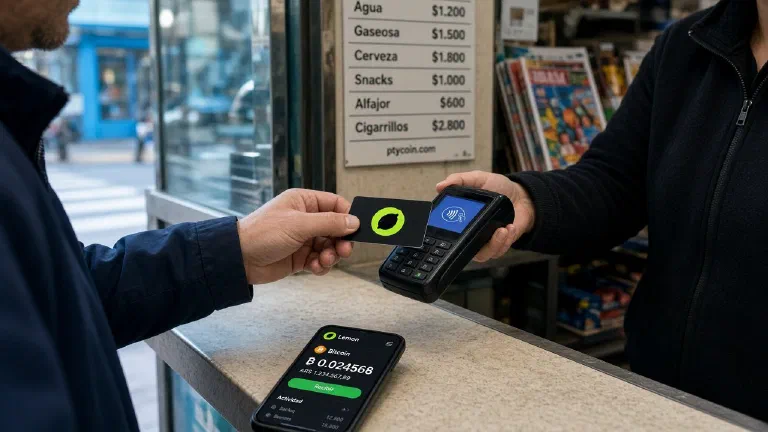
Lulucard is the spend face: a Mastercard you request in-app, delivered to your address, with primary and backup crypto balances that debit when you tap. The Lulucard FAQ (updated 31 July 2026) is specific enough to quote:
- No maintenance fee once issued.
- Monthly purchase-and-ATM limit of USD 8,333; daily and per-purchase caps of USD 5,000; ATM cash-out capped at USD 1,500 per month.
- ATM fees: $0.80 in Panama, $5 in Guatemala, Costa Rica, and elsewhere.
- Card purchases convert crypto at the same rate as an in-app sell; the FAQ says there is no extra card fee on top of that conversion. Purchases outside Panama or Guatemala inherit the provider’s USD-to-local FX.
- Apple Pay / Google Pay: not available yet, per the same FAQ.
The remittance path sits on a U.S. virtual deposit account. Inside the app you open dollar deposit details, then pull from PayPal, Payoneer, Wise, and similar platforms. Dollars that land convert to USDC. Lulubit’s U.S. deposit FAQ and company PayPal tutorial both put the fee at 1.5% of inbound USD on that path (example: $10 in → 9.85 USDC), with a one-time account-open charge quoted in stablecoins. Marketing pages then say you can sell that USDC and withdraw to your local bank sin costo. So “zero-fee remittances” in the backlog brief is really “zero Lulubit fee on the last-mile bank withdrawal,” not a free ride from PayPal to Panama. PayPal’s own transfer fees still apply and are outside Lulubit’s control.
Stablecoin balances can also sit in a yield product the qué es Lulubit page still markets at up to 7% variable APY, “según producto disponible,” while the company’s LinkedIn About currently shows 5%. Those schedules disagree across surfaces, so check the live in-app rate. Either way the line is a product schedule, not a deposit rate with a bank guarantee, and it is not financial advice.
Scale claims, headcount, and what the money bought
In an August 2025 seed announcement Lulubit said it raised $1.3 million led by Reverie and Lattice, with Side Door Ventures and family offices in Panama and Guatemala. At that moment the company claimed 50,000+ users, nearly doubled AUM in a quarter, 1,500+ Lulucards used daily, and 100+ businesses on a B2B collection line. A later LinkedIn company update floated 80,000+ app users when a separate Business Platform launched. Those are first-party marketing numbers, not audited disclosures. PitchBook-style aggregator totals for cumulative raise and headcount diverge and go stale; treat them as secondary.
Headcount is the same story. Tracxn showed 18 employees as of 31 July 2026 (and 13 earlier in the year); PitchBook has listed 14; LinkedIn has sat around 18 in the 11–50 band. The useful takeaway is not a precise roster. It is that this is still a small custodial operator, not a Bitso-scale exchange with a compliance floor of hundreds. Balances sit with the operator after KYC: if your threat model needs keys you control, this is the wrong tool.
Panama’s missing VASP licence
Lulubit is a custodial app in a country that still has no enacted dedicated VASP regime as of mid-September 2026. The 2022 crypto law was struck down as unconstitutional in 2023. The draft track we mapped in Panama’s fintech bill 314 (Anteproyecto 314 / Proyecto de Ley 487) remained pending first debate when we last wrote it up, and later independent reviews of the Official Gazette through August 2026 still found no promulgated VASP statute. Do not read this profile as implying Lulubit holds a Panama VASP licence. It does not, because that licence object does not exist yet. Company marketing that leans on “compliance” language describes AML/KYC under general rules, not a dedicated VASP registry. Costa Rica and Guatemala may impose separate local requirements; product availability varies by country, and users should check in-app terms rather than assume a single regional passport.
That posture is different from ikigii, which leans on Towerbank’s SBP bank licence, or from Littio, which prints mandatario / non-bank language on every page. Lulubit’s bet is operational: stay useful across three Central American clearing systems while the legal wrapper catches up. SBP Acuerdo 1-2026 already tightens bank AML for fintech relationships even without a VASP law.
Takeaway
Lulubit is a Panama City team productizing a Central American frustration: crypto exchanges that ignore local banks, and remittance rails that ignore crypto. The concrete stack is custodial balances, three-country bank withdrawals in your own name, a Mastercard Lulucard with published dollar limits, a U.S. virtual account that turns inbound dollars into USDC at 1.5%, and a still-unfinished Panama VASP story on the regulatory side.
For readers comparing after ikigii (SBP-supervised bank) or Littio (Colombia mandatario dollar neobank), start with who holds the keys and which bank rail you actually need this week, then price the 1.5% PayPal path and the card ATM schedule against Wise, a self-custody wallet plus a separate on-ramp, or a single-country competitor. Check the live FAQ before treating any fee in this piece as current. This is a product map, not a recommendation to open an account or move a remittance through a custodial app.