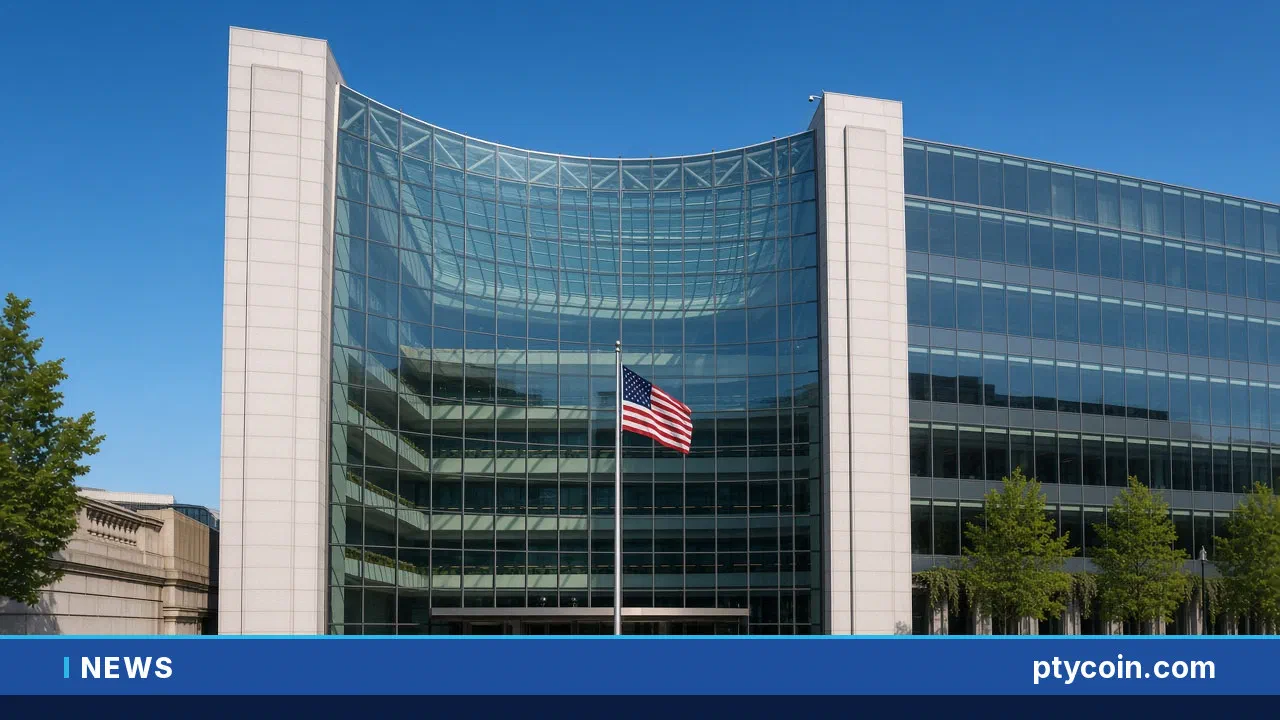
Staff at the SEC’s Division of Corporation Finance will not recommend that the Commission bring an enforcement action if LabsCo, Molecule AG’s U.S. subsidiary, sells Project Tokens for one biotech research project without registering the offer under Section 5 of the Securities Act. The same answer covers leaving those tokens unregistered as a class of equity, the registration that Section 12(g) of the Exchange Act describes. Molecule, a Swiss company, describes the tokens as membership and access credentials for that project. A holder who locks tokens may cast an advisory vote on research priorities. The vote would not bind LabsCo.
The response, a staff no-action letter, is dated 24 November 2026. Jonathan A. Ingram, deputy chief counsel in the Office of Chief Counsel, signed it. It covers a sale made in reliance on counsel’s opinion.
One Delaware company
LabsCo is a Delaware limited liability company that Molecule controls, built around a single research project. Molecule told staff, in a request Lewis Rinaudo Cohen of Cahill Gordon & Reindel sent on 19 November, that LabsCo would create and sell the tokens, own certain intellectual property tied to the project and direct the research. LabsCo would set up a Wyoming unincorporated nonprofit association made up of the token holders. The association would receive intellectual property the community contributes, pass that property to LabsCo and hold no material assets. Molecule expects to form more subsidiaries later. The response names LabsCo only.
LabsCo would sell the tokens for fiat or crypto. It would also hand them out as airdrops and as rewards for tasks such as reviewing proposals or contributing data. Reward tokens would carry the same access as tokens LabsCo sells, and no financial rights. One token is the minimum for membership in the association and for protocol access, token-gated data, dashboards, events and the project’s publications. A larger holding may open a higher tier, for instance getting the research data sooner or an invitation to a session with the project’s scientists. Molecule works in decentralized science (DeSci) and calls this structure Coin-to-Company.
The terms staff were given
A Project Token, the request says, is not an ownership stake, a right to profit or revenue, or a say in how LabsCo is run. It cannot be converted into a security. LabsCo may mint more tokens at any time, and it may sell more from the inventory it holds. Buyers are not promised a fixed supply.
Before any offer or sale, LabsCo would publish a white paper. That paper will not promote price, returns, efforts to lift the token’s value, or a future sale of shares. The same limit covers every other Molecule or LabsCo communication. The paper and those other communications will say that holding a token, or locking one, gives no priority, preference, or other advantage if shares are offered later. Footnote 9 of the request says the relief would not cover a party that breaks those marketing limits.
A holder may lock tokens in a non-custodial contract, keep self-custody and receive non-transferable Locked Token Receipts that record how many are locked. The holder may take the tokens back out at any time, except any amount that must stay locked if LabsCo later issues shares to that holder. While the tokens are locked, the holder may cast advisory votes, one per token, on research priorities, and only when LabsCo chooses to open a vote.
Tokens that are not locked may trade freely, with no lockup. Reward tokens move on the same terms. LabsCo expects to facilitate liquidity. Neither Molecule nor LabsCo will run a trading venue or act as a market maker, and LabsCo may sell more tokens into secondary markets without promising any particular amount of liquidity.
The response stands on the representations above. Different facts or conditions might require a different conclusion. Ingram’s note records the Division’s enforcement position and stops there. It states no legal conclusion. The Commission issued no rule in it.
Shares only if LabsCo offers them
Shares are a separate choice, and the choice is LabsCo’s. Only if the research later makes substantial progress, and only if LabsCo then decides to finance commercial development, may the company offer equity. The offering would be registered, or done under an exemption. Applicants would have to meet the offering’s criteria, and LabsCo would choose who receives shares. Holding a token, or locking one, is not a precondition to apply or to take part, and it gives no priority, preference, or other advantage. The request says many projects may never offer equity.
After shares are issued, the investor must keep at least as many tokens locked as shares held. The lock is an on-chain identity credential so it can match the share register LabsCo keeps off-chain. LabsCo grants any shortfall for free. While that investor holds the shares, the matched tokens stay locked. Tokens locked beyond that number can be released.
Molecule’s 24 November blog post describes the equity route as running from locked tokens. The request filed with staff says locking is not required to apply. The post names Regulation D, for investors putting in capital, and Rule 701, for community members who provide genuine services to the project, as sample exemptions. In the request, the lawyers argue that the tokens are digital tools under the Commission’s March 2026 interpretive release, Release No. 33-11412, bought for consumptive use rather than as investment contracts. PTYcoin’s report on the later proposing release cites 33-11412.
The first project is still ahead
That post calls the letter a validator for potential institutional investors. It also says the first project in Molecule’s ecosystem will use the model in the coming weeks. No project is named, and no date is given. Benjamin Snipes, the chief legal officer, wrote the same day that Molecule and the letter bring together “the best of blockchains with traditional equity structures to accelerate the production and commercialization of science in the US, Europe and worldwide.”
According to The Block, staff have issued several crypto no-action letters over the past year, including for DoubleZero, Fuse and Canton.